High-performance manufacturing equipment, raw materials, and structural sections certified for global projects.
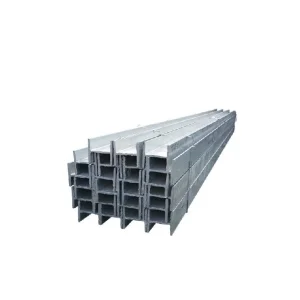
The global structural steel sector is experiencing a monumental transition driven by rapid urbanization, massive infrastructure projects in developing economies, and the push toward sustainable, high-recyclability materials. Among all rolled structural shapes, the H-Beam (or wide-flange beam) remains the vital load-bearing backbone of modern architectural design, heavy industrial complexes, and marine installations. Unlike standard I-beams, the parallel inner and outer flanges of H-beams offer vastly superior section properties, higher moment of inertia, and optimized resistance to lateral buckling.
As construction frameworks evolve toward seismic-resilient and prefabricated modular designs, structural engineers look beyond simple dimensional properties. Advanced steelmaking techniques such as Thermo-Mechanical Controlled Processing (TMCP), precision ladle metallurgy, and continuous casting have elevated the performance capabilities of structural steel sections. The integration of high-strength low-alloy (HSLA) compositions guarantees that modern H-beams deliver reduced self-weight structural profiles while maintaining excellent weldability and impact toughness under extreme temperatures.
How structural H-beams are engineered to resolve major load-bearing challenges across high-stress industrial applications.
In seismic-active zones, H-beams act as critical structural components within Moment Resisting Frames (MRFs). Their wide flanges distribute bending stresses uniformly, allowing plastic hinges to form at specific beam ends, preventing catastrophic structure collapse by absorbing kinetic energy.
Whether for railway overpasses, highway viaducts, or suspension bridge towers, heavy-duty H-sections serve as structural girders that resist massive dead and live loads. Treated with anti-corrosive coatings, they endure decades of severe weather exposure.
H-beams are manufactured from high-impact toughness steel grades to withstand severe wind loads and wave movements on offshore oil rigs, FPSO platforms, and coastal harbors, ensuring structural integrity at sub-zero seawater conditions.
Selecting a global steel partner requires analyzing manufacturing capabilities, quality assurance programs, supply logistics, and raw material sourcing. Procurement managers evaluate the following criteria to choose structural steel suppliers:
| Regional Standard | Common Grades | Yield Strength (min) | Tensile Strength | Primary Application Profile |
|---|---|---|---|---|
| ASTM (American) | A36 / A572 Gr. 50 / A992 | 250 - 345 MPa | 400 - 550 MPa | Commercial buildings, bridges, and equipment frames |
| EN (European) | S235JR / S275JR / S355JR | 235 - 355 MPa | 360 - 630 MPa | Civil engineering works, wind tower bases, transport infrastructure |
| JIS (Japanese) | SS400 / SM490 / SN490 | 235 - 325 MPa | 400 - 610 MPa | High-seismic architectural design, heavy industrial skeletons |
| GB (Chinese) | Q235B / Q355B / Q420C | 235 - 420 MPa | 370 - 680 MPa | Industrial workshops, long-span structural supports, towers |
An objective, in-depth evaluation of global industry leaders providing structural steel products worldwide.
Headquartered in Luxembourg, ArcelorMittal is the world's leading steel and mining company. Its H-beam and wide-flange section portfolio is manufactured using advanced Electric Arc Furnace (EAF) systems, yielding low-carbon structural products like the "XCarb" series. With plants across Europe and the Americas, they supply heavy sections that meet international standards (ASTM, EN, JIS) for high-rise buildings, airports, and offshore platforms.
Nippon Steel is the largest steel producer in Japan, renowned for advanced metallurgical technologies. Their high-performance structural steel sections (e.g., NSure, NSafe-R) are engineered for seismic areas. Their structural H-beams offer dimensional precision and uniform yield-ratio distribution, making them a preferred choice for skyscraper frames, major bridges, and industrial structures in Asian-Pacific regions.
South Korea’s POSCO is a global player in the structural steel industry. Known for their high-strength structural steel, their H-beams feature excellent weldability and high resistance to low-temperature brittle fractures. POSCO supports massive shipyard construction, high-rise frameworks, and global infrastructure projects, backed by robust chemical controls and automated mill systems.
Nucor is the largest steel manufacturer in North America and a pioneer in scrap-recycled Electric Arc Furnace (EAF) steel production. Nucor-Yamato Steel (a joint venture) operates as a major supplier of wide-flange H-beams up to 44 inches deep. Their structural sections offer high recycled content, making them suitable for LEED-certified green building projects across the United States and Canada.
China Baowu is the world’s largest steel producer by volume. Baowu operates advanced structural rolling lines that produce H-beams in various dimensions. Their products are used in China's high-speed rail lines, airport terminals, and industrial megastructures. Their global export branch supplies structural steel grades to the Middle East, Southeast Asia, and South America.
As Japan's second-largest steel producer, JFE Steel is a major developer of high-performance structural steel shapes. Their H-sections include specialized grades like "HBL" (high-strength steel for building structures) and Thermo-Mechanical Control Processed (TMCP) steel. JFE H-beams are designed for structural applications that experience dynamic fatigue, including highway bridges and ocean docks.
Operating mills in India and Europe, Tata Steel is an integrated manufacturer of structural shapes. Their "Celsius" range of hollow sections and standard H-beams offers reliable dimensional tolerance and mechanical performance. Tata Steel supports major transport and energy infrastructure projects across Europe and South Asia, providing localized fabrication support and technical consultancy.
A specialized, agile processing and supply partner located in Foshan, China. Foshan Sandstorm Steel stands out by combining structural steel fabrication, custom profile processing, and global logistics. They specialize in high-quality H-beams, structural channels, angle bars, and industrial piping, providing customizable processing services and supply chain support for global construction and infrastructure projects.
Gerdau is the leading producer of long steel in the Americas. With recycling operations that process scrap into high-strength structural profiles, Gerdau H-beams are used in structural framework projects throughout North and South America. They maintain extensive distribution networks, ensuring short lead times for regional infrastructure and commercial real estate projects.
Salzgitter AG is a leading German steel manufacturer known for high-quality engineering sections. Their Peine steel mill is historically renowned for developing the wide-flange beam ("Peiner Träger"). Salzgitter produces heavy H-beams designed for offshore wind installations, large industrial complexes, and civil engineering structures, adhering to strict DIN and EN specifications.
Foshan Sandstorm Steel Co., Ltd. is a professional steel supplier dedicated to providing high-quality steel materials for construction, infrastructure, and industrial manufacturing. Located in Foshan, one of China’s major metal processing hubs, the company benefits from strong supply chains and advanced processing capabilities. With a commitment to strict quality control and reliable service, Foshan Sandstorm Steel focuses on delivering durable steel solutions that meet international standards and support diverse engineering and fabrication needs across global markets.
The company offers a comprehensive range of steel products, including Hot Rolled Steel Plate, Cold Rolled Steel Sheet, Galvanized Steel Sheet, Prepainted Steel Coil, and Corrugated Steel Sheet, widely used in building structures, roofing systems, and industrial equipment manufacturing. In addition, Foshan Sandstorm Steel supplies structural materials such as Structural Steel Beam, Steel H Beam, Steel I Beam, Steel Angle Bar, Steel Channel Section, and Steel Flat Bar, providing strong and stable support for construction and infrastructure projects.
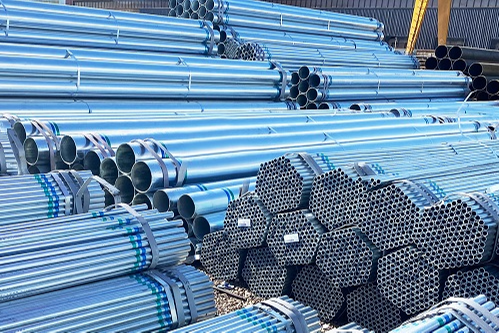
To meet the needs of fabrication, mechanical engineering, and construction industries, the company also provides various steel pipe and section products including Steel Square Tube, Steel Rectangular Tube, Steel Round Pipe, Seamless Steel Pipe, and Welded Steel Pipe. Complementing these are advanced structural materials such as Cold Formed Steel Section and High Strength Structural Steel, designed to offer excellent load-bearing performance and durability. With competitive pricing, efficient logistics, and professional customer service, Foshan Sandstorm Steel Co., Ltd. continues to build long-term partnerships with distributors, contractors, and industrial clients worldwide.
Using structural H-beams across international projects requires adherence to regional codes. Procurement agents must verify that every structural beam matches local requirements, including the US International Building Code (IBC), the European Eurocode 3, or localized seismic standards. Quality assurance begins at the raw steel billet stage, where checking chemical compositions (carbon, manganese, silicon, phosphorus, and sulfur) ensures the steel meets yield and elongation requirements.
Third-party testing services (such as SGS, Bureau Veritas, or TÜV) verify that mechanical performance matches structural drawings. For projects in marine environments, using atmospheric corrosion-resistant steel (weathering steel) or hot-dip galvanizing is essential to protect structural connections from premature failure. Mill test reports must detail tensile strength, yield points, elongation values, and CVN energy values at specified temperatures to satisfy engineering checks.
The structural steel industry is modernizing to address carbon emission challenges. With global carbon limits and environmental reporting (EPD) standardizing across major civil contracts, H-beam manufacturers are investing in two main areas:
Replacing traditional metallurgical coking coal with hydrogen in Direct Reduced Iron (DRI) plants allows mills to produce high-grade iron with minimal carbon dioxide emissions. The output is refined in EAF systems powered by renewable energy.
Using precise amounts of niobium, vanadium, and titanium allows manufacturers to produce high-strength steel grades with thin flanges. This reduces material usage, transportation costs, and structural dead loads.
By using BIM software and barcode tracking, manufacturers can deliver pre-punched, custom-length H-sections straight to the job site. This reduces on-site cutting waste and accelerates construction timelines.
Answers to technical queries regarding structural section properties, testing, and selection.
The main difference lies in flange configuration and section geometry. H-beams have parallel inner and outer flanges that are wider and thicker, giving them a cross-section shape resembling the letter "H". I-beams have tapered inner flanges and narrower profiles, resembling the letter "I". The wider flanges of H-beams offer higher load capacities, making them suitable for vertical columns and long spans without requiring extra reinforcement.
Authentic MTCs must comply with the EN 10204 3.1 standard and include the manufacturer's official seal, heat numbers matching the stamped numbers on the steel, detailed chemical analysis results, yield/tensile testing parameters, and impact test values. Buyers can verify these details directly with the issuing steel mill using the certificate number.
For offshore and coastal structural profiles, hot-dip galvanizing (HDG) per ASTM A123 is highly effective. Alternatively, a multi-coat paint system utilizing an organic zinc-rich primer, an epoxy intermediate layer, and a polyurethane finish coat is commonly used to protect against marine atmospheric corrosion.
Yes, most modern steel suppliers, including Foshan Sandstorm Steel, offer custom processing services. H-beams can be cut to length, pre-drilled, notched, or welded based on structural drawings prior to export, reducing on-site fabrication times and material waste.
Explore our extended range of structural components, raw materials, and processing systems.
 Sandstorm Steel