In the modern manufacturing sector, processing equipment sanitation is of paramount importance. Foshan Sandstorm Steel Co., Ltd. stands as a premier supplier and processing partner, dedicated to providing high-quality steel materials for construction, infrastructure, and sanitary industrial manufacturing. Located in Foshan, one of China’s major metal processing and metallurgical hubs, our company benefits from robust, mature supply chains, sophisticated quality assurance systems, and state-of-the-art finish polishing technologies.
When dealing with food-contact surfaces, standard raw metal finishes fall short. True Food-Grade Finishing demands stringent control over microscopic topography, ensuring that surfaces inhibit bacterial adhesion, withstand aggressive chemical sanitation (CIP cycles), and resist localized pitting corrosion. Our engineering team combines material selection, mechanical surface preparation, and precision testing to deliver high-level finishing.
Whether sourcing raw structural bases or precision-polished plates, global food and pharmaceutical industries rely on materials that conform strictly to sanitary benchmarks. Through our integrated supply network, we guarantee structural components match high-grade standards, optimizing structural safety and clean-room plant architecture.
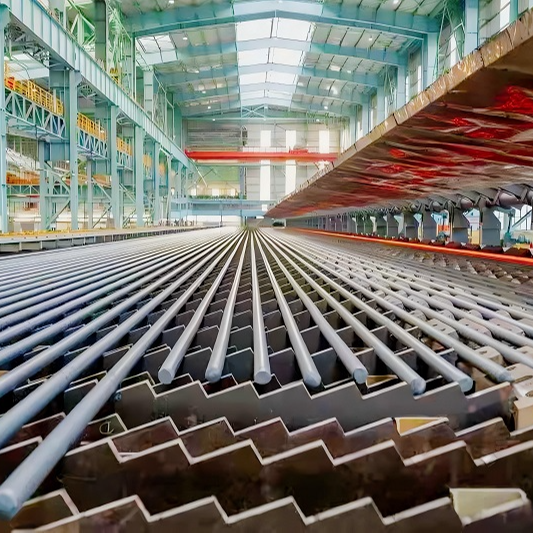
Foshan Sandstorm Steel Co., Ltd. - ISO 9001:2015 Certified Metal Processing Center.
Surface morphology plays a critical role in preventing biofilms. We explain the metrics used to qualify hygienic steel processing.
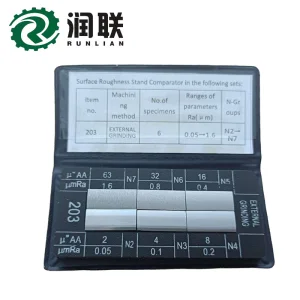
The surface roughness average ($R_a$) is the globally recognized measure of surface texture. Under 3-A Sanitary Standards, food contact surfaces typically require an $R_a \le 32\,\mu\text{in}$ ($0.8\,\mu\text{m}$). For high-purity sectors like biopharmaceuticals and dairy processing, our processing centers achieve ultra-smooth surfaces of $R_a \le 0.4\,\mu\text{m}$.
To verify microscopic topology compliance, we use advanced testing machinery. By utilizing our high-accuracy Surface Roughness Tester for Ra, Rz, Rq, Rt Parameters, our quality inspectors generate precise profiles. This allows us to guarantee that there are no micro-crevices or deep abrasions where bacteria could colonize.
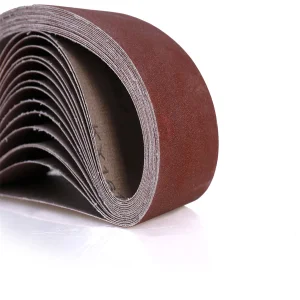
Achieving sanitary requirements depends on using the correct abrasive sequence. Mechanical processing utilizes specialized materials, such as our Zheng Yi Zy-0010 Abrasive Grinding Sanding Belt 60/80/ 120/ 150/ 240 Grits, designed to smooth out weld beads and surface defects. This ensures a consistent, satin-like or mirror-like sanitary finish.
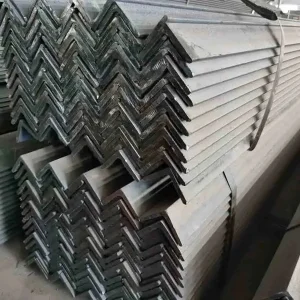
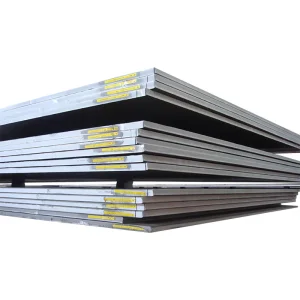
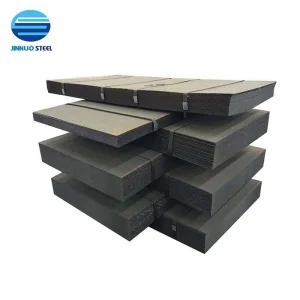
Foshan Sandstorm Steel supplies high-grade steel plate, structural channel, and section solutions tailored to cleanroom and infrastructure frameworks.
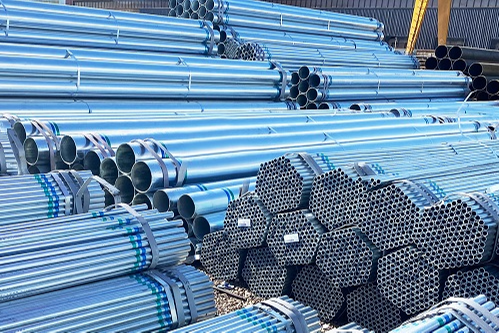
Foshan Sandstorm Steel warehouse, housing structural bars, carbon plates, and specialty coils.
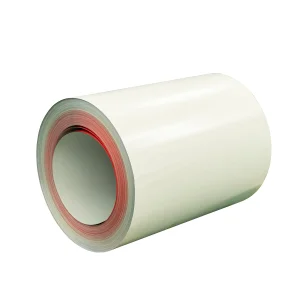
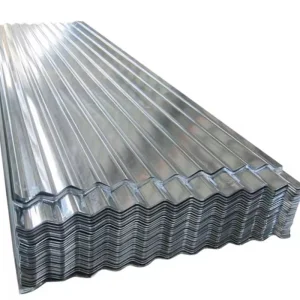
The company offers a comprehensive range of steel products, including Hot Rolled Steel Plate, Cold Rolled Steel Sheet, Galvanized Steel Sheet, Prepainted Steel Coil, and Corrugated Steel Sheet, widely used in building structures, roofing systems, and industrial equipment manufacturing. In addition, Foshan Sandstorm Steel supplies structural materials such as Structural Steel Beam, Steel H Beam, Steel I Beam, Steel Angle Bar, Steel Channel Section, and Steel Flat Bar, providing strong and stable support for construction and infrastructure projects.
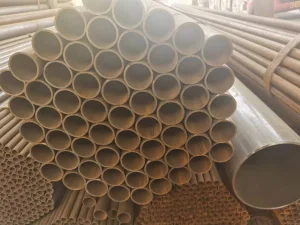
To meet the needs of fabrication, mechanical engineering, and construction industries, the company also provides various steel pipe and section products including Steel Square Tube, Steel Rectangular Tube, Steel Round Pipe, Seamless Steel Pipe, and Welded Steel Pipe. Complementing these are advanced structural materials such as Cold Formed Steel Section and High Strength Structural Steel, designed to offer excellent load-bearing performance and durability. With competitive pricing, efficient logistics, and professional customer service, Foshan Sandstorm Steel Co., Ltd. continues to build long-term partnerships with distributors, contractors, and industrial clients worldwide.
Procuring food-grade steel profiles and sanitary components from China is no longer just about reducing direct manufacturing costs. It is about leveraging a highly optimized, fully integrated industrial cluster. Located in Southern China’s metal hub, Foshan Sandstorm Steel Co., Ltd. operates at the center of this industrial network. This proximity gives us unique advantages:
Direct partnerships with leading local smelting operations ensure stable pricing, consistent chemical composition, and trace certification for high-alloy stainless steels.
From precision slitting to computerized multi-stage abrasive polishing, we handle everything locally, lowering transit times and processing costs.
Proximity to major international shipping hubs like Guangzhou and Shenzhen facilitates fast, secure global shipping with full export customs clearance.
When specifying stainless steel for sanitary environments, selecting the correct grade is critical. Standard grade 304 stainless steel is widely used for general structural components and standard dry environments. However, in environments with high chloride concentrations (such as dairy processing, brine handling, or vinegar fermentation), molybdenum-bearing grade 316/316L stainless steel is required.
Beyond steel chemistry, the surface finishing must prevent biofilm formation. Mechanical polishing removes macroscopic surface defects. However, it can also fold microscopically thin layers of metal, trapping fine abrasive dust. To address this, our high-precision processing combines mechanical pre-polishing with chemical passivation. This process builds up a dense chromium oxide passive layer, protecting the underlying steel from pitting corrosion.
Operating across global markets requires strict compliance with diverse regional standards. We work closely with contractors and compliance managers to ensure all delivered products conform to international requirements.
Through robust testing procedures and documentation, we supply international projects with full confidence, helping clients navigate rigorous import controls and third-party quality audits.
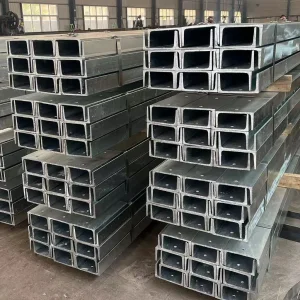
Different markets require localized design adjustments. For example, Australian installations must conform strictly to local load-bearing requirements, such as our Australian Standard 150*75 Flange Channels Galvanised C Sections, while European installations require specific standard shapes.
Our engineering support team bridges this gap by translating international architectural drawings and mechanical designs into certified, local production steps. This ensures seamless integration during final assembly on-site.
From advanced automation to green chemical processing, modern engineering continues to raise the standards for surface finishes.
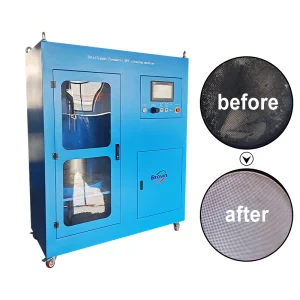
Manual hand-polishing can lead to slight variations across large metal sheets. To counter this, modern factories use automated robotic systems. Devices like our Robotic Washing System and specialized automatic polishing arms ensure uniform pressure, yielding consistent surface roughness across the entire product.
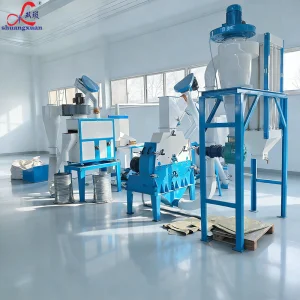
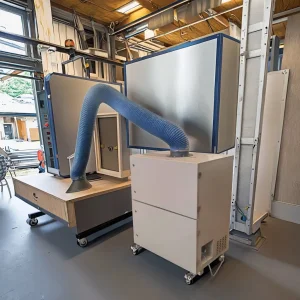
Precision surface grinding generates micro-particulates. To protect operators and maintain high product cleanliness, modern factories integrate advanced exhaust systems, such as our Comprehensive Dust Extraction and Air Purification System, keeping the workspace clean and free of airborne contaminants.
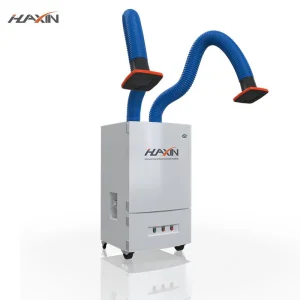
For critical applications, we utilize cleanroom manufacturing areas. Using specialized extraction solutions, like our Dust Extraction Arm and Welding Fume Air Purifier, we prevent cross-contamination from iron particles, maintaining the purity of stainless steel surfaces during fabrication.
Common questions from procurement managers, engineering offices, and quality control departments.
 Sandstorm Steel