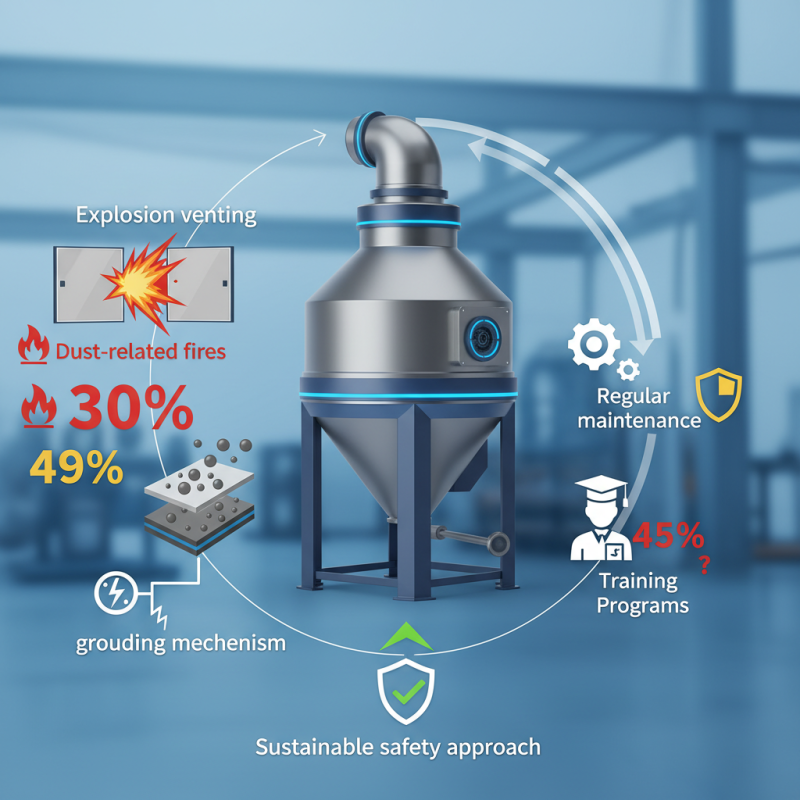
Ensuring safety requirements for metal dust collectors is paramount in industrial settings. The National Fire Protection Association (NFPA) reports that combustible metal dust contributes to over 30% of dust-related fires. This statistic highlights the urgency of addressing safety measures effectively. Operators must prioritize understanding the safety requirements for metal dust collectors to mitigate risks.
What are the safety requirements for metal dust collectors? Proper design is crucial. Collectors must include explosion venting, filters, and grounding mechanisms. However, many businesses underestimate these components. A 2022 industry survey revealed that only 49% of companies fully comply with NFPA guidelines regarding metal dust. The gaps in compliance can jeopardize worker safety and operational integrity.
Implementing regular maintenance and training programs increases overall effectiveness. Yet, research shows that only 45% of operators receive adequate training on dust management. The importance of ongoing education cannot be overstated. Investing in safety ensures a sustainable approach. Industry advancements are promising, but organizations must reflect on their current practices to guarantee rigorous standards.
Metal dust poses significant hazards in various industrial environments. This fine particulate can easily ignite, leading to explosions and fires. The nature of metal dust is often underestimated, but understanding its characteristics is critical for workplace safety.
Implementing robust dust collection systems is essential. Ensure that these systems are designed to efficiently capture metal dust at the source. Regular maintenance is key. Dust collectors can become less effective if not serviced properly. Workers must also be trained to recognize hazards associated with metal dust.
Tips: Always monitor air quality. Use sensors to detect dust levels in the atmosphere. Encourage employees to wear appropriate personal protective equipment. Proper ventilation can also help mitigate risks.
Even with precautions, risks may remain. Not all dust is visible to the naked eye. Continuous assessment of workplace conditions is necessary to avoid complacency. Reviewing safety protocols helps to maintain a culture of awareness and readiness.
Metal dust collectors play a crucial role in maintaining a safe working environment. Adhering to regulatory standards is essential for ensuring their effectiveness. The National Fire Protection Association (NFPA) identifies that metal dust can be highly combustible. A report indicates that nearly 1,000 dust-related incidents occur annually in industrial settings. Compliance with industry standards is vital for risk mitigation.
Regulatory frameworks such as OSHA and NFPA provide guidelines for metal dust management. OSHA mandates that employers control harmful dust exposure. It’s reported that nearly 80% of workplaces fail to meet essential safety standards. Regular audits and inspections can improve compliance rates. Facilities must evaluate their systems frequently to align with evolving regulations.
Documentation is another crucial aspect. Keeping records of maintenance and inspections ensures accountability. Many organizations overlook this step. Reports suggest that facilities with proper documentation reduce risks by 30%. Investing in training for personnel can enhance understanding of safety protocols. Awareness is fundamental in preventing accidents related to metal dust.
In the quest for safer metalworking environments, selecting the right dust collection system is paramount. Metal dust collectors play a crucial role in managing fine particles generated during machining processes. One essential safety feature is the explosion venting system. This helps to mitigate the risk of dust explosions by relieving pressure. Proper installation of these vents should follow industry guidelines for maximum effectiveness.
Another critical aspect is the filtration efficiency of the collectors. High-efficiency filters trap microscopic particles that may pose health risks. Regular maintenance checks ensure that filters remain clean and effective. Furthermore, incorporating monitoring systems can provide real-time alerts for any inefficiencies or malfunctions. These systems help in maintaining continuous safety standards.
It’s also vital to consider material compatibility in construction choices. Specific metal types may react differently under heat or stress. Choosing the right materials can minimize risks. However, some manufacturers may overlook this detail, leading to potential hazards. A comprehensive safety audit can highlight these concerns and prompt necessary adjustments. Ensuring these features are in place significantly contributes to a safer working environment for everyone involved.
Maintaining metal dust collectors is essential for safe operations. Regular maintenance ensures optimal performance and reduces risks. Operators should conduct weekly inspections to identify any wear or damage. By keeping a routine checklist, you can catch problems early. It’s crucial to check filters and replace them as needed. Clogged filters can lead to dust accumulation and potential hazards.
Tips for maintenance: Always turn off the power before performing any maintenance. This prevents accidental starts during repairs. Document all findings during inspections. This creates a history of issues and helps with future troubleshooting.
Training staff is another important aspect. Workers must understand the proper use of dust collectors. They should be aware of dust types and collection goals. Encourage open communication about potential concerns. Sometimes, feedback reveals problems that might not be obvious during inspections.
Consider the environment where the collectors operate. High humidity can affect performance. Dust can vary greatly; ensure your collectors are suited for the specific type. A mismatch can reduce efficiency and create safety hazards. Regularly review operational procedures. This can highlight areas needing improvement and ensure adherence to safety standards.
Training and awareness programs play a crucial role in ensuring safety compliance for metal dust collectors. Effective training helps employees understand hazards associated with metal dust. It also promotes proper handling and maintenance of dust collectors. Regular workshops and hands-on sessions can significantly raise awareness. Employees should feel confident in operating equipment safely.
Consider incorporating real-life scenarios during training. This approach engages participants and fosters practical skills. Simulations of dust collection failures may reveal gaps in knowledge. Awareness programs should not only focus on regulations but also emphasize best practices. Safety checklists can serve as practical tools for everyday use.
Evaluation of these programs is essential. Gather feedback to make necessary adjustments. Seek insights from employees to enhance training effectiveness. Regular updates and refresher courses ensure that knowledge stays current. Involving team members in discussions may uncover overlooked safety practices. Continuous learning is key to maintaining a safe work environment.
: Metal dust is fine particles that can ignite, causing explosions and fires. Understanding its risks is crucial for safety.
Implement efficient dust collection systems. Regular maintenance of these systems is essential for optimal performance.
Workers must recognize the hazards of metal dust. Training and awareness are vital for safety in the workplace.
Use sensors to detect dust levels. Monitoring air quality helps identify potential hazards before they become serious.
Good ventilation reduces dust levels in the air. It helps mitigate the risks associated with metal dust exposure.
Training helps employees understand hazards and safely handle dust collectors. It promotes best practices for maintaining equipment.
Using real-life scenarios engages participants. It also reveals gaps in knowledge through practical simulations of dust collection failures.
Conditions can change, and risks may remain unnoticed. Ongoing assessments prevent complacency and promote a safety culture.
Safety checklists should include regular maintenance tasks and equipment monitoring. They serve as practical tools for daily safety.
Gathering feedback is essential for improvement. Involving employees can reveal overlooked safety practices and enhance training effectiveness.
The article titled "2026 How to Ensure Safety Requirements for Metal Dust Collectors?" delves into the complexities surrounding metal dust and the associated hazards. It emphasizes the importance of adhering to regulatory standards, which serve as the framework for safe operations in environments dealing with metal dust. Key safety features in metal dust collection systems, such as effective filtration and explosion prevention mechanisms, are essential in mitigating risks.
Additionally, the article outlines best practices for maintenance and operations to ensure these systems function safely and efficiently. Crucially, it highlights the role of training and awareness programs in fostering a culture of safety compliance among employees. By addressing the question, "What are the safety requirements for metal dust collectors?" the article presents a comprehensive guide to maintaining safety in industries that handle metal dust, enhancing both worker protection and operational integrity.

Sandstorm Steel