How long steel structures last in outdoor environments depends on more than steel grade alone. Rain, salt spray, humidity, pollution, temperature changes, design details, and maintenance all influence service life. A painted carbon-steel frame may perform for 25 to 50 years in a moderate atmosphere. Properly designed and maintained structures can last much longer. Coastal exposure can shorten that period dramatically.
ISO 9223 classifies atmospheric corrosivity from very low to extreme. Its framework shows why one lifespan cannot fit every project. The NACE IMPACT Study estimated global corrosion costs at approximately $2.5 trillion annually, equal to 3.4% of global gross domestic product. That figure includes preventable damage. It also reveals the price of weak inspection routines. The American Galvanizers Association reports that hot-dip galvanized coatings often provide decades of protection, depending on coating thickness and local exposure.
Dr. Mars G. Fontana, a respected corrosion engineer, wrote, “Corrosion is the deterioration of a material resulting from a reaction with its environment.” That principle remains practical outdoors. Water trapped beneath a base plate can matter more than the structure’s visible size. A small scratch near a welded joint may become the first serious failure point. Not dramatic. Still important.
This guide examines how long steel structures last in outdoor environments, using corrosion categories, protective systems, inspection intervals, and real-world conditions. The estimates are useful, but imperfect. A neglected structure may fail early. A carefully detailed one may outlive expectations.
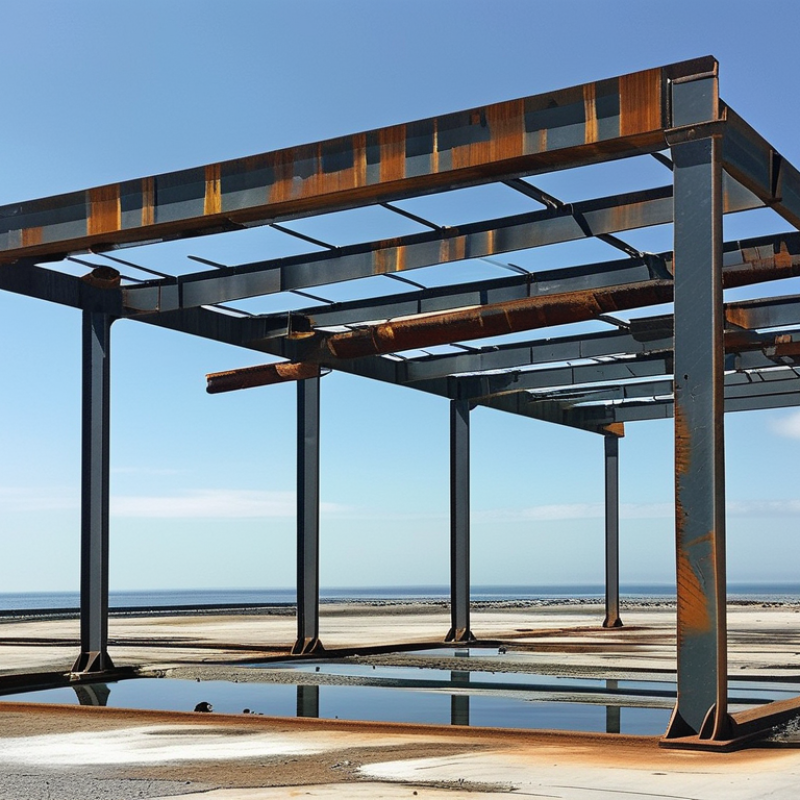
Outdoor steel structures can last 30 to 70 years, but the number is never guaranteed. Exposure, design quality, and maintenance usually matter more than the calendar.
Moisture is the main concern. Rainwater trapped inside joints can create rust that remains hidden for years. Coastal air accelerates corrosion because salt settles on exposed surfaces. Industrial areas may add acidic pollutants. A well-designed structure sheds water through sloped surfaces, sealed connections, and clear drainage paths.
The protective system also matters. Proper galvanizing can provide durable protection, while paint systems need suitable surface preparation and correct film thickness. Small scratches should be repaired before rust spreads beneath the coating. Thin sections may deteriorate faster than large beams.
Design loads affect service life too. Repeated vibration, impact, or unexpected overloading can loosen connections and cause fatigue damage. Inspections should check welds, bolts, base plates, and areas touching concrete. These details are easy to overlook.
A practical inspection schedule might include visual checks every year and detailed assessments after severe storms. Cleaning may be necessary in salty or dusty locations. In my experience, neglected drainage often causes more damage than dramatic weather. Still, lifespan estimates can be imperfect. Hidden corrosion, poor original workmanship, and changed site conditions may shorten the expected service period. A structure that looks sound from the ground may need closer examination.
Outdoor steel structures can last 25 to 100 years, depending on design, coating, drainage, and climate. The steel itself is rarely the only concern. Trapped water, salt deposits, and damaged paint often accelerate corrosion around joints and bolt connections.
Painted structural steel usually needs major recoating within 15 to 25 years. ISO 12944-1:2017 defines “high” coating durability as 15 to 25 years before major maintenance, not total structural failure. With regular inspections, many painted frames can remain serviceable for 40 to 60 years. That estimate may be optimistic in coastal areas. Salt air is unforgiving.
Hot-dip galvanized steel commonly provides 50 to 100 years of protection in rural or suburban environments. In severe industrial or marine exposure, its service life can fall sharply. Weathering steel may perform for 75 years or more when it stays ventilated and dries quickly. Poor drainage can defeat that advantage. For bridges, federal transportation guidance often uses a 75-year design life, while well-maintained structures may operate longer. These figures are planning benchmarks, not promises. Site exposure, inspection quality, and repair decisions still control the outcome. A small rust stain deserves attention before it becomes a structural problem.
Steel structures can last 50 years or longer outdoors, but weather often determines their real service life. Rainwater starts the process, especially when it remains trapped around joints, bolts, and drainage points. Oxygen and moisture then create electrochemical corrosion on exposed steel.
Salt makes deterioration faster. Coastal air carries chloride particles onto surfaces, while road spray affects bridges and parking structures. Industrial zones may add sulfur compounds and acidic pollutants. The NACE IMPACT study estimated global corrosion costs at 3.4% of worldwide gross domestic product. It also reported that 15–35% of corrosion costs could be avoided through better protection and management. The figure is broad, but difficult to ignore.
Temperature changes create another problem. Steel expands during hot afternoons and contracts at night. Repeated movement can open small coating cracks. Freeze-thaw cycles push water into damaged areas. Even a tiny blister may hide active corrosion underneath. ISO 9223 classifies outdoor atmospheric environments by factors such as humidity, salinity, and pollution. A sheltered inland column may face low corrosivity, while a coastal column can experience high or very high exposure.
In practice, inspection quality matters as much as the original design. I have seen apparently sound surfaces fail around unsealed crevices. That is easy to underestimate. Cleaning, drainage checks, coating measurements, and early repairs reduce uncertainty. Yet maintenance records are often incomplete, and corrosion rarely follows a perfect pattern. Textbook assumptions need field verification.
Steel structures can last 30 to 60 years outdoors when design, coating, and maintenance work together. Harsh coastal air, industrial pollution, standing water, and freeze-thaw cycles can shorten that period. A sheltered beam may remain sound for decades, while an exposed connection can rust within a few seasons.
Surface preparation is the foundation of durable protection. Workers should remove mill scale, oil, salts, and loose rust before applying a compatible coating system. A typical system may include a corrosion-resistant primer, an intermediate barrier coat, and a weather-resistant finish. Each layer needs the correct thickness and curing time. Small defects matter. A pinhole near a bolt can allow moisture beneath the coating.
Annual visual checks can identify blistering, cracking, rust staining, and damaged edges. Pay close attention to welds, drainage points, fasteners, and horizontal surfaces where water collects. Inspectors can measure coating thickness and test adhesion when visual evidence is unclear. Repairs should be cleaned, feathered, and recoated rather than simply brushed over. That shortcut often fails.
Maintenance intervals should reflect the environment, not a fixed calendar. Coastal steel may need attention every few years, while dry inland structures may require less frequent work. I have seen maintenance plans fail because they ignored one leaking joint. Protective coatings extend steel life, but only when inspections lead to timely, practical repairs.
How Long Do Steel Structures Last Outdoors?
Outdoor steel rarely fails because of age alone. Moisture, salt, trapped dirt, and poor drainage usually accelerate damage. The NACE IMPACT study estimated global corrosion costs at $2.5 trillion annually, or about 3.4% of global economic output. That figure explains why routine inspection matters.
Watch for red-brown streaks, bubbling paint, flaking coatings, and swollen joints. Rust trapped between overlapping plates can force them apart. This condition, called pack rust, may distort connections and reduce effective thickness. Look closely at column bases, welds, bolt holes, and areas holding water. A small crack can matter. Bent members, loose bolts, unusual vibration, or new sagging require prompt professional assessment. Do not simply paint over active corrosion. It hides the evidence.
Visual checks are useful, but imperfect. A clean surface can still conceal internal section loss. The Federal Highway Administration’s National Bridge Inventory records more than 617,000 highway bridges, with many exceeding 50 years of service. Their condition varies widely, proving that age is only one factor. A qualified structural engineer may use ultrasonic thickness testing, coating evaluation, and connection checks before recommending repair or replacement. Replacement becomes more likely when corrosion has removed significant steel, damaged primary connections, or caused repeated deformation. Local climate, maintenance history, and exposure classification under ISO 9223 should guide the decision. Thresholds are not universal. That is where owners sometimes misjudge risk.
| Outdoor Environment | Typical Service Life* | Common Deterioration Factors | Warning Signs | Recommended Response |
|---|---|---|---|---|
| Dry inland climate Low humidity and limited exposure to de-icing salts |
40–75 years or more with sound design and routine maintenance | Coating aging, trapped moisture at joints, dust accumulation, ultraviolet exposure | Faded or chalking paint, small rust spots, cracked sealant, loose fasteners | Inspect and maintain. Clean surfaces, renew sealants, and repair coating damage before corrosion spreads. |
| Humid or rainy climate Frequent wetting and slow drying |
25–60 years, depending on drainage and corrosion protection | Repeated moisture cycles, poor drainage, condensation, coating breakdown | Blistering paint, orange-brown rust, water retained at bases, damp or stained connections | Arrange a professional inspection. Correct drainage and treat active corrosion promptly. |
| Coastal or marine environment Salt-laden air and airborne chlorides |
15–40 years without strong protection; longer with suitable systems and maintenance | Chloride-driven corrosion, salt deposits, windblown moisture, galvanic corrosion | Rapid rusting, flaking scale, perforations, corroded welds, seized or thinning fasteners | Inspect urgently. Use qualified corrosion assessment and consider member replacement where section loss affects capacity. |
| Cold region with de-icing salts Freeze–thaw cycles and salt exposure |
20–50 years, strongly influenced by salt control and drainage | Chloride contamination, trapped water, ice expansion, impact from snow-clearing equipment | Rust near ground level, swollen seams, cracked coatings, bent or impact-damaged members | Repair and protect. Remove deposits, improve drainage, and assess any deformation or reduced thickness. |
| Industrial or polluted atmosphere Moisture combined with corrosive gases or particulates |
15–40 years without a suitable protective system | Acidic pollutants, chemical deposits, abrasive dust, elevated surface contamination | Under-film corrosion, heavy scale, coating delamination, pitting around connections | Obtain a detailed condition survey. Select a coating system suitable for the measured exposure conditions. |
| Hot, sunny climate High temperatures and intense ultraviolet exposure |
30–60 years, depending on coating quality and moisture control | Ultraviolet degradation, thermal movement, coating embrittlement, occasional rain events | Chalking, fading, hairline coating cracks, exposed steel, warped or loose components | Recoat and monitor. Restore the protective layer and check joints for movement-related damage. |
| Well-maintained galvanized or coated steel Exposure matched with an appropriate protection system |
40–80 years or more in favorable conditions | Mechanical damage, cut edges, incompatible metals, neglected inspection points | Bare steel at scratches, white corrosion products on zinc coatings, staining at joints | Continue preventive maintenance. Touch up damaged areas and keep inspection records. |
| Any outdoor steel structure Regardless of climate or protective finish |
Service life cannot be determined by age alone | Overloading, accidental impact, design changes, water ingress, poor repairs, hidden corrosion | Sagging, unusual vibration, leaning, cracked welds, separated connections, holes, severe section loss | Restrict access if safety is uncertain and seek an engineer’s assessment. Repair or replace affected members based on structural capacity. |
*Service-life ranges are indicative rather than guarantees. Actual durability depends on steel detailing, protective coating or galvanizing, drainage, exposure severity, loading, construction quality, inspection frequency, and the timing of maintenance.
Outdoor steel structures may last 25 to 100 years. Design, coatings, drainage, climate, and maintenance affect the actual lifespan. These figures are planning estimates, not promises.
Painted steel often needs major recoating after 15 to 25 years. With regular inspections, the frame may remain serviceable for 40 to 60 years. Recoating does not mean structural failure.
Yes. Salt particles accelerate corrosion on exposed surfaces, joints, bolts, and drainage points. Salt air is unforgiving. Coastal estimates should be more conservative.
Check column bases, welds, bolt holes, overlapping plates, and water-trapping joints. Red-brown streaks and bubbling paint deserve attention. Small rust stains can grow quietly.
Watch for flaking coatings, swollen joints, bent members, loose bolts, unusual vibration, or new sagging. Pack rust can force connected plates apart. Do not paint over active corrosion.
Yes. Corrosion may continue inside crevices or beneath intact coatings. Visual inspection is useful but imperfect. Surface appearance alone cannot confirm remaining steel thickness.
Keep drainage paths clear and remove trapped dirt, salt, and standing water. Inspect coatings and repair damaged areas early. Maintenance records should be detailed, though they are often incomplete.
Professional assessment is advisable when corrosion removes significant steel or damages primary connections. Repeated deformation may also support replacement. The correct threshold depends on exposure and structural condition.
Steel expands during hot periods and contracts as temperatures fall. Repeated movement can open small coating cracks. Freeze-thaw cycles may push water deeper into damaged areas.
No. A sheltered inland structure may outperform an exposed coastal one. Inspection quality and repair decisions can change the result. Predictions can be wrong without field verification.
How long steel structures last in outdoor environments depends on several factors, including steel quality, design, exposure, drainage, installation, and maintenance. In relatively mild conditions, well-protected steel buildings, bridges, fences, and support frames may remain functional for several decades, while structures exposed to coastal salt, industrial pollution, constant moisture, or severe temperature changes may deteriorate much faster. Weather causes corrosion when water and oxygen react with exposed steel, and repeated freeze-thaw cycles, strong sunlight, wind-driven debris, and standing water can accelerate damage.
Protective coatings, galvanizing, proper sealing, effective drainage, and regular inspections can significantly extend service life. Maintenance should include cleaning dirt and salt deposits, repairing damaged coatings, removing rust, and replacing weakened fasteners or components. Warning signs that an outdoor steel structure needs repair or replacement include deep rust, flaking surfaces, cracks, bending, loose connections, holes, water accumulation, and noticeable movement. Early action helps prevent minor corrosion from developing into expensive or unsafe structural failure.

Sandstorm Steel