China Top 10 Steel Profile Manufacturers How Are They Made?

Time:2026-11-06 Author:Mason
0%

Steel profiles may look like simple lengths of metal, yet their performance depends on precise decisions made at every production stage. World Steel Association data show that China produced about 1,005 million tonnes of crude steel in 2024, underscoring the scale of the country’s steel industry. That figure measures crude steel, not finished profiles—a distinction buyers should keep in mind when comparing manufacturers.

Understanding how steel profiles are formed in manufacturing helps explain why supplier capabilities differ. Producers may cast billets, blooms, or slabs, reheat them, and pass them through shaped rolls. Temperature, alloy composition, roll design, and cooling all affect dimensions and mechanical properties. Small variations matter. A slightly twisted beam or uneven flange can complicate fabrication and installation.

Metallurgist John D. Verhoeven’s book Steel Metallurgy for the Non-Metallurgist provides a useful foundation for understanding how composition and processing influence steel properties. The following sentence is an editorial paraphrase, not a verbatim quotation: “A profile’s performance depends on both its chemistry and its forming route.” That principle frames this guide to China’s leading steel-profile manufacturers. The comparison considers product range, production capability, quality controls, and evidence buyers can verify. Rankings still require judgment; available public information is uneven, and a polished catalog is not proof of consistent output. Look beyond claims. Ask for specifications, inspection records, and samples suited to the intended application.
China Top 10 Steel Profile Manufacturers How Are They Made?

China’s Steel Industry Context: 1.019 Billion Tonnes of Crude Steel in 2023

China produced 1.019 billion tonnes of crude steel in 2023, according to industry production statistics. That represented roughly 54% of global crude steel output. The figure signals the scale of the country’s steel supply, but it does not mean every tonne became a finished profile. Crude steel is an input. Beams, channels, and angles require further processing.

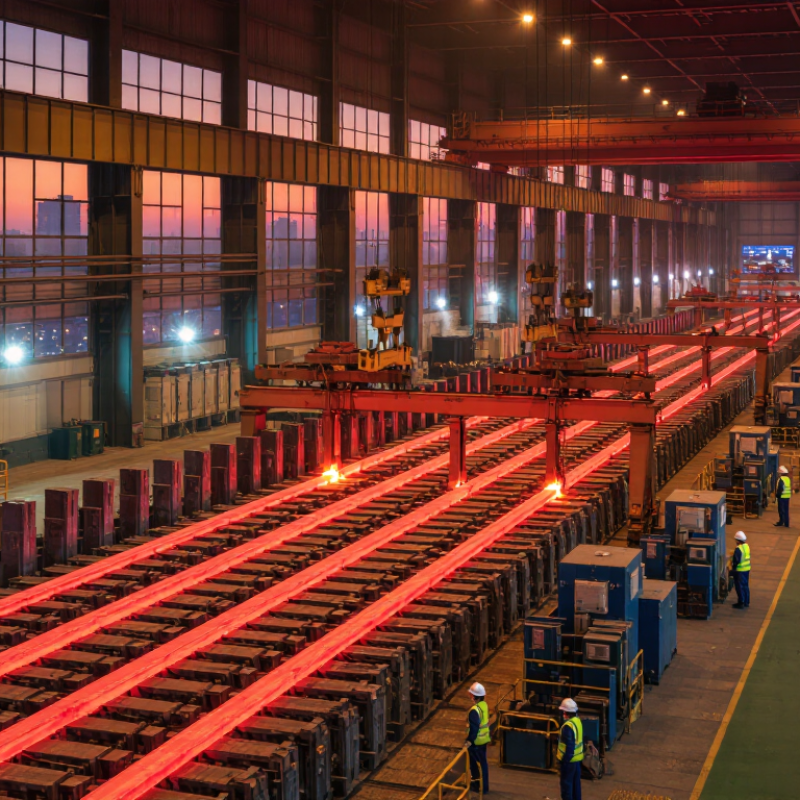
For common hot-rolled profiles, steel is heated and passed through shaped rollers. Each pass gradually forms the required cross-section. Operators monitor temperature, dimensions, and surface condition; even a small deviation can affect fit during construction. The profile is then cooled, cut to length, and inspected. Simple steps, but not effortless.

A vast production base can support steady material availability and many product specifications. Still, national output alone cannot confirm a mill’s quality, delivery record, or environmental performance. Buyers need product tests and traceable documentation. There is also a trade-off worth examining: high output does not automatically mean efficient use of energy or raw materials. That part is easy to overlook.

How to Compare China’s Top 10 Steel Profile Manufacturers by Capacity and Standards

Comparing China’s leading steel-profile manufacturers requires more than ranking advertised annual tonnage. The World Steel Association reported China produced 1,005.1 million tonnes of crude steel in 2024. That national figure does not measure finished beams, channels, or angles. A supplier’s usable profile capacity depends on rolling-line size, shift patterns, changeover time, and material yield. Request audited output by product type and month, plus utilization data for the past year. Paper capacity can look impressive.

Standards show whether capacity delivers consistent material. Check product-specific requirements, including GB/T 706-2016 for hot-rolled section steel and GB/T 11263-2017 for hot-rolled H-sections. Request mill test certificates listing heat numbers, dimensions, chemical composition, and mechanical results. ISO 9001 supports process management, but does not prove every shipment meets a product specification. Compare tolerances, sampling frequency, traceability, and third-party inspection scope on equal terms. During a site visit, inspect cooling beds, straightening equipment, and calibration records. Small details matter. Certificates may look tidy while delivery records are messy, so verify recent orders, not just brochures.

China’s Top 10 Steel Profile Manufacturers: How to Compare Capacity and Standards

This standards benchmark compares nominal minimum yield strength for selected structural steel grades. Yield strength is not production capacity: a manufacturer’s capacity must be verified separately using current, product-specific production data. Values shown are in MPa; requirements can vary by thickness, product form, and standard edition.

From Billet to Profile: Reheating at 1,100–1,250°C and Hot Rolling

A steel profile begins as a billet, which enters a reheating furnace before hot rolling. Mills commonly heat billets to about 1,100–1,250°C, helping the steel deform through successive rolling stands. The exact target depends on steel grade, billet dimensions, and the required profile. A glowing billet moves from roughing stands to finishing rolls, where grooves gradually shape its cross-section. Heat must penetrate the core, not just the surface.

Temperature control affects both quality and energy use. An underheated billet can resist deformation; overheating may increase oxidation and surface scale. The International Energy Agency’s Iron and Steel Technology Roadmap estimates that the sector emitted about 2.6 gigatonnes of direct CO₂ in 2019. The World Steel Association reports 1,892.2 million tonnes of crude steel production in 2023. These figures show why furnace efficiency matters at industrial scale. In practice, one setpoint can mislead: billet chemistry and furnace loading change the result. A narrow temperature gap can still leave uneven material.

Tip: Watch the billet’s color, but verify it with calibrated temperature measurements. Check furnace zones and rolling speed together; the brightest surface does not always mean an evenly heated core.

Cooling, Straightening, and Cutting Profiles to GB/T 706-2016

After hot rolling, steel profiles leave the mill glowing and slightly vulnerable to distortion. On the cooling bed, operators control spacing and airflow so sections cool more evenly. Uneven cooling can create bow or twist. Heat history matters. World Steel Association’s World Steel in Figures 2025 reports 1,882.6 million tonnes of crude steel production worldwide in 2024. That figure describes crude steel, not finished profiles, but it underlines the scale of production where repeatable process control matters.

Once profiles reach a suitable temperature, straightening rolls correct curvature and twist. Operators check straightness, flange shape, and web condition against the product requirements. GB/T 706-2016 sets requirements for hot-rolled sections, including dimensions, shape, mass, and permitted deviations. A straightener setting that works for one section size may mark or distort another. Small adjustments matter. Still, a neat specification does not guarantee a straight beam; handling and cooling can undo good rolling work.

Profiles are then cut to ordered lengths, using a saw or other suitable cutting equipment. Clean ends make later fit-up easier, while burrs and heat effects need inspection. Length and dimensional checks should follow the applicable GB/T 706-2016 requirements and the buyer’s order. Record measurements at the line, not only at final inspection. That detail is easy to miss.

How Quality Checks Verify Profile Dimensions, Grades, and Mechanical Properties

Steel profiles begin as heated billets or slabs, then pass through shaped rolls that form beams, channels, angles, or hollow sections. Cooling and straightening follow. Small process changes can affect the finished shape, so inspection starts with the drawing and its stated tolerances.

For dimensional checks, inspectors use calibrated calipers, tape measures, and gauges to check flange width, web depth, wall thickness, and straightness. Laser systems can scan longer sections for twists or uneven edges. They compare results with the specified standard, not a general “good enough” target.

Material records and heat numbers help confirm the steel grade. Tensile tests measure strength and elongation; hardness or impact tests may also be required. Test frequency depends on the order and applicable specification.

A tidy report helps, but it cannot replace sound sampling. That distinction is easy to overlook.

Tips: Ask for inspection records linked to the production batch. Check that measuring tools are calibrated, and clarify which dimensions and mechanical tests were sampled. If a result sits near a tolerance limit, request a repeat check before accepting the profile.

FAQS

How much crude steel did China produce in 2023?

China produced about 1.019 billion tonnes, roughly 54% of global crude steel output. That is a huge figure.

Does crude steel output show how many finished profiles are available?

No. Crude steel is an input, not a finished beam, channel, or angle. Further rolling and processing are needed.

How can buyers compare a manufacturer’s actual profile capacity?

Ask for audited monthly output by product type and utilization data from the past year. Check rolling-line size, shift patterns, changeover time, and material yield. Paper capacity can look impressive.

Which product standards should buyers check?

For hot-rolled section steel, check GB/T 706-2016. For hot-rolled H-sections, check GB/T 11263-2017. Match the standard to the product.

What should a mill test certificate include?

Look for heat numbers, dimensions, chemical composition, and mechanical test results. Traceable records matter.

Does ISO 9001 prove every shipment meets a product specification?

No. It supports process management, but does not guarantee each shipment meets its required specification. That distinction is easy to miss.

What should buyers inspect during a site visit?

Check cooling beds, straightening equipment, and calibration records. Small details matter. A polished tour is not enough.

How can buyers check a supplier’s delivery record?

Review recent orders and delivery records, not only brochures or certificates. I would not treat tidy paperwork as proof of consistent delivery.

Does high national steel output prove a mill is efficient or environmentally responsible?

No. National output alone cannot confirm a mill’s quality, delivery performance, or environmental results. Ask for evidence specific to the mill.

Conclusion

China produced 1.019 billion tonnes of crude steel in 2023, providing a substantial foundation for its steel profile industry. Comparing leading manufacturers involves more than production capacity: buyers and project planners also need to consider applicable standards, product consistency, dimensional accuracy, and the ability to meet required mechanical properties. These factors help explain how suppliers can differ even when they produce similar types of profiles.

The article outlines how steel profiles are formed in manufacturing, from reheating billets to approximately 1,100–1,250°C and shaping them through hot rolling. The profiles are then cooled, straightened, and cut to specified lengths, with dimensions and tolerances assessed against GB/T 706-2016. Quality checks also verify the steel grade and mechanical properties, helping ensure that finished profiles meet stated requirements and are suitable for their intended applications.

Mason

Mason

Mason is a seasoned marketing professional with a deep expertise in the company's offerings and a passion for driving brand awareness. With a strong background in digital marketing strategies, he has an innate ability to connect with diverse audiences and effectively communicate product benefits.......