What is the future of laser assisted metal finishing technology?

Time:2026-07-10 Author:Madeline
0%

The future of laser-assisted metal surface finishing is poised for significant growth. According to industry research by MarketsandMarkets, the global market for laser-based finishing technologies is projected to reach USD 1.2 billion by 2026, growing at a CAGR of 12.5%. This growth is driven by increasing demands for precision and quality in manufacturing processes.

As industries adopt more advanced finishing techniques, laser technology offers several advantages. It provides precise control over surface characteristics and enables complex geometries without negatively impacting the substrate. Companies in aerospace and automotive sectors are already leveraging this technology to enhance product durability. Yet, challenges remain. The high initial investment and the need for skilled operators can hinder widespread adoption.

What is the future of laser-assisted metal surface finishing? The answer lies in overcoming these hurdles. Ongoing research is essential to improve cost-efficiency and expand applications. As the technology matures, it could redefine industrial finishing standards. Addressing these concerns is crucial for maximizing its potential and ensuring sustainable growth in the sector.
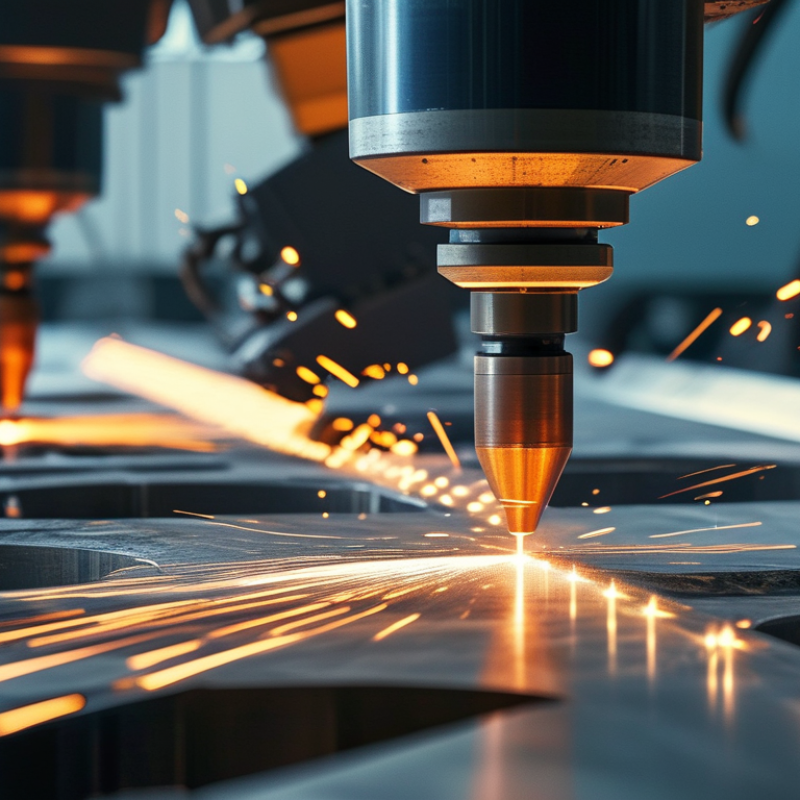
What is the future of laser assisted metal finishing technology?

Future Trends in Laser Assisted Metal Finishing Technology

The future of laser-assisted metal finishing technology is poised for significant advancements. This field combines precision and efficiency. Enhanced surface qualities lead to improved product performance. Innovations in laser systems allow for finer control over treatment parameters. This makes it possible to achieve complex finishes that were previously unfeasible.

Emerging trends report a growing focus on automation. Integrating artificial intelligence can enhance process optimization. As demand for customization increases, laser technologies will likely evolve. New applications in various industries, especially aerospace and automotive, will redefine standards. The ability to manipulate surfaces at the micro-level opens doors to novel applications.

However, the integration of new technologies has its challenges. The learning curve for operators can be steep. Ensuring consistent quality across different materials is a concern. Investing in training and adopting best practices is crucial. Collaboration between research institutions and industries will be vital. This will foster reliable methods and contribute to the technology's evolution. As we move forward, embracing both potential and obstacles will shape the future of this promising technology.

Advancements in Laser Technologies for Metal Finishing

Laser-assisted metal finishing technology is evolving rapidly. Various advancements in laser technologies are transforming the industry. Companies are now able to achieve finer surface finishes with reduced processing times. Lasers can create intricate patterns that were once impossible. These precise capabilities enhance the aesthetics and functionality of metal components.

New techniques, like laser polishing, improve surface smoothness without significant material removal. This method not only saves time but also reduces waste. Nonetheless, challenges remain. For instance, optimizing laser parameters can be complex. Operators must continuously assess their processes to ensure quality. Even subtle changes can lead to inconsistent results.

Research is ongoing to refine these technologies. Experts are exploring hybrid methods that combine lasers with traditional finishing techniques. Collaboration in the field is crucial for pushing boundaries. As the industry progresses, the importance of skilled operators cannot be overstated. A deep understanding of materials and processes is essential for maximizing the potential of laser-assisted finishing.

Advancements in Laser Technologies for Metal Finishing

Applications of Laser Assisted Finishing in Various Industries

Laser-assisted finishing technology is transforming multiple industries by enhancing metal surfaces efficiently. In automotive manufacturing, it improves the quality of components. The precise application of lasers reduces surface roughness, promoting better adhesion for coatings. This ensures that cars are not only visually appealing but also durable and resistant to corrosion.

In the aerospace sector, this technology is crucial for weight reduction. By selectively finishing parts, it maintains structural integrity while minimizing material use. Additionally, the medical field benefits significantly. Laser-assisted techniques help create intricate designs on surgical instruments, which enhances precision and performance. However, challenges remain in achieving uniformity across different materials.

These applications highlight the promise of laser-assisted finishing. The potential for innovation is vast, yet there are areas for improvement. Manufacturers must continuously refine their methods and address inconsistencies. This evolving technology demands adaptability and a forward-thinking mindset to unlock its full capabilities.

Challenges and Limitations of Laser Assisted Metal Finishing

Laser assisted metal finishing technology shows promise, but it faces several challenges. One key limitation is the high cost of equipment. According to a recent industry report, initial investment for laser systems can reach up to 500,000 USD. This steep cost can deter small and medium enterprises from adopting the technology. Additionally, the operational complexities require skilled technicians. A lack of trained professionals can slow down the adoption rate in many industries.

Another challenge is the variability in processing speed. Different metals respond uniquely to laser treatment. A metal that finishes smoothly might take longer with a different alloy. This inconsistency can lead to inefficiencies in production lines. Furthermore, there’s the issue of laser source stability. Inconsistent laser output can compromise the quality of the finish. Maintaining quality requires stringent monitoring and calibration, adding to operational costs.

Tips for those exploring this technology include investing in staff training to enhance skills. This will ensure the team can optimize laser settings effectively. Regular maintenance of equipment is also crucial for consistent performance. Companies should also consider conducting pilot tests with different materials to understand variability better. Understanding these challenges will enhance future integration and effectiveness.

What is the future of laser assisted metal finishing technology? - Challenges and Limitations of Laser Assisted Metal Finishing

Dimension Details
Technology Maturity Emerging
Common Applications Aerospace, Automotive, Electronics
Advantages Precision, Reduced Waste, Versatility
Challenges High Initial Costs, Skill Gap, Material Limitations
Limitations Heat Affected Areas, Surface Finish Consistency
Future Trends Automation, Integration with AI, Eco-friendly Practices

Environmental Impact and Sustainability of Laser Finishing Techniques

Laser-assisted metal finishing technology has gained attention for its potential environmental benefits. Unlike traditional methods, laser finishing minimizes waste generation. This precision technique reduces the need for chemical treatments. Fewer harmful substances mean less pollution. However, it is important to analyze the energy consumption of laser systems.

While lasers often lower material waste, they require a significant amount of electricity. This raises questions about their sustainability. Are renewable energy sources powering these machines? The industry must address this to enhance environmental benefits. Also, the impact of heat on metal properties should not be overlooked.

Research is still ongoing. The long-term effects of laser finishing on metal fatigue and wear are not fully understood. As professionals move forward, they should consider these factors. Balancing efficiency with ecological responsibility is crucial. The future of laser finishing hinges on sustainability and innovation.

FAQS

: What advancements are happening in laser-assisted metal finishing technology?

: The industry is seeing rapid advancements. Finer surface finishes and reduced processing times are being achieved with lasers.

How does laser polishing improve metal finishing?

Laser polishing enhances surface smoothness with minimal material removal. This saves time and reduces waste significantly.

What challenges do operators face with laser technologies?

Operators must optimize laser parameters, which can be complex. Continuous process assessment is needed to maintain quality.

Are there any hybrid methods being explored in laser finishing?

Yes, researchers are looking into combining laser techniques with traditional finishing. This collaboration can push the industry forward.

What is the environmental impact of laser finishing techniques?

Laser finishing reduces waste and minimizes chemical use, leading to less pollution compared to traditional methods.

How does energy consumption of lasers affect sustainability?

Lasers consume significant electricity. It raises concerns about sustainability, especially regarding renewable energy sources.

What is still unclear about the effects of laser finishing?

The long-term effects on metal fatigue and wear are not fully understood. More research is needed in this area.

Why is operator skill important in laser-assisted finishing?

Skilled operators have a deep understanding of materials and processes, which is essential for maximizing laser technology's potential.

What balance must professionals maintain in laser finishing?

Balancing efficiency with ecological responsibility is crucial for future advancements. Sustainability should not be overlooked.

What factors should be considered for the future of laser finishing?

Professionals must consider energy use, heat impact on metals, and long-term sustainability. Reflection on processes is key.

Conclusion

The future of laser-assisted metal finishing technology offers promising advancements and innovative applications across various industries. As laser technologies continue to evolve, they are set to enhance precision and efficiency in metal surface finishing processes. This includes improvements in laser systems that increase the quality of finishes and expand their capabilities. However, the adoption of these technologies is accompanied by challenges, including high initial costs and the need for specialized training.

Additionally, environmental considerations are becoming increasingly important. The sustainability of laser finishing techniques must be evaluated to ensure they align with the industry's push towards greener practices. Ultimately, the question "What is the future of laser-assisted metal surface finishing?" points to a landscape where technological advancements must be balanced with environmental responsibility, indicating a transformative shift in how metal finishing is viewed and executed.

Madeline

Madeline

Madeline is a dedicated marketing professional with a wealth of expertise in our company's core offerings. With a keen understanding of the industry, she brings a unique perspective to her role, consistently delivering high-quality content that highlights the superior aspects of our products. As......