How to Choose Reliable Steel Suppliers in China?

Time:2026-11-20 Author:Aria
0%

Choosing a steel supplier in China is not just a price comparison. It is a decision about material consistency, traceability, and delivery risk. The scale is substantial: the World Steel Association reported that China produced about 1,005 million tonnes of crude steel in 2024, roughly 53% of global output. That figure comes from its 2025 production data. A large market offers choice, but it does not make every mill or trading company equally dependable.

For buyers researching how to choose reliable steel suppliers, start with evidence you can verify. Ask for mill test certificates linked to the actual heat number, then check grades, dimensions, and tolerances against your purchase specification. Confirm who made the steel, who will export it, and whether an independent inspection can be arranged before shipment. Quality expert W. Edwards Deming wrote, “Quality is everyone’s responsibility.” The principle applies here: certificates matter, but so do production controls and clear communication. A supplier should answer practical questions about batch traceability, packaging, and corrective action without vague promises.

Look closely at one real sample. Check its markings, surface condition, and paperwork side by side. Small discrepancies are easy to overlook. They can become costly later. Price still matters, of course, but the cheapest quotation may leave important checks unanswered. Even a thorough review cannot remove every risk; it can make the remaining risks visible before you commit.
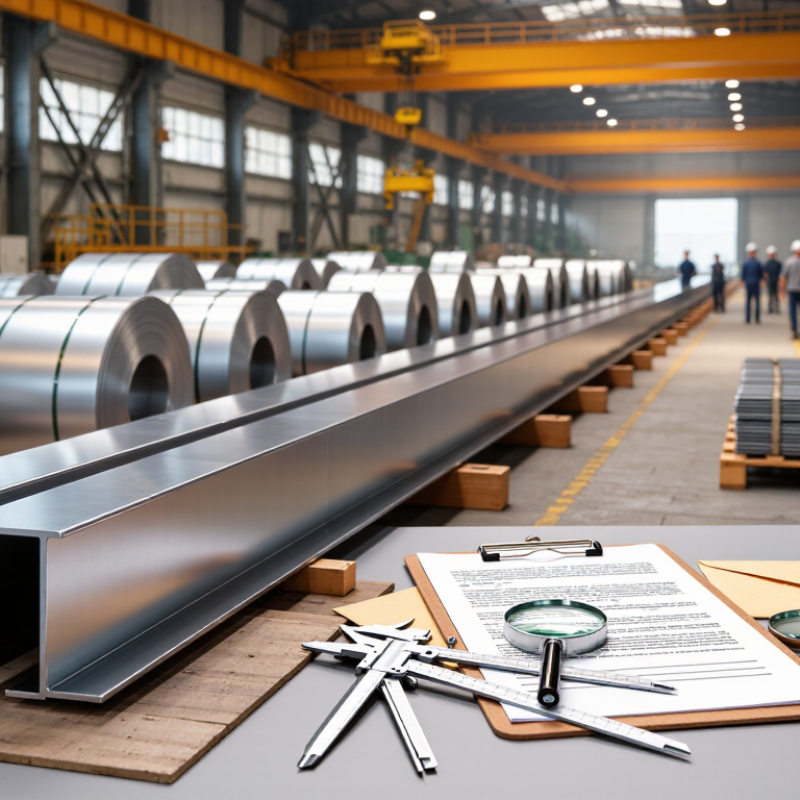
How to Choose Reliable Steel Suppliers in China?

Define Your Steel Requirements and Quality Standards

Before contacting steel suppliers in China, turn your intended use into a precise specification. State the steel grade, governing standard, product form, dimensions, and permitted tolerances. A request for “carbon steel plate” leaves too much open to interpretation. Specify thickness, width, length, surface condition, and any coating or edge requirements. Small details matter. A few millimeters can affect fit, machining time, and material yield.

Set quality requirements before comparing quotations. Identify the required chemical composition, tensile strength, yield strength, and hardness, where applicable. Name the inspection method and the documents you expect, such as a material test certificate linked to the supplied batch. If a property matters, make it measurable. “Good surface quality” is vague; define acceptable defects or request clear inspection criteria. Consider asking for a sample or inspection records from a comparable production lot. One detail is easy to overlook: confirm whether stated tolerances follow the same standard in the quotation and production documents. I would not assume they do. Needs can change, too, so mark which requirements are essential and which allow flexibility. That makes supplier responses easier to compare and gives both sides a clearer basis for resolving discrepancies.

Identify Supplier Types and Manufacturing Capabilities

China’s steel market includes integrated mills, specialist producers, service centers, and trading companies. These suppliers do different jobs. Integrated mills usually control more production stages, while specialist plants may focus on stainless, coated, or high-strength grades. Service centers cut, slit, or process standard stock; traders may coordinate orders without owning production equipment.

The World Steel Association’s World Steel in Figures 2025 reports that China produced about 1,005 million tonnes of crude steel in 2024, roughly 53% of world output. That scale offers choice, not automatic quality. Scale is not proof. Ask whether the quoted company owns the mill, and request a live video walk-through or an independent site audit. Check furnace and rolling capacity, monthly output, thickness tolerances, and testing equipment against your order. Request a sample inspection report and traceable mill test certificates for the same grade and heat number. A polished brochure is easy to prepare; matching documents to the actual production line takes more effort. I would still verify this personally, because paperwork can appear stronger than the shop floor.

Verify Certifications, Production Facilities, and Quality Controls

When evaluating a steel supplier in China, verify certificates with the issuing organization instead of relying only on scanned copies. Check that each certificate covers the actual production site, product grade, and process you need. Confirm expiry dates and company details. Small mismatches deserve questions. A certificate alone cannot show how consistently a mill controls production.

Inspect the facility, or request a live video walkthrough if travel is impractical. Look for orderly material storage, calibrated testing equipment, and clear identification on steel bundles. Ask how staff track heat numbers from incoming material to finished products. Review sample inspection reports and test records, including measurements for thickness, dimensions, and mechanical properties. Records matter. A supplier may perform well on one order yet struggle with a different coating or thickness. I would not treat one good sample as proof; consistency across batches is harder to judge.

Tips: Ask for recent, order-specific test reports and compare them with your purchase specifications. Request photos showing bundle labels and markings. If an answer feels vague, ask for a concrete example. A neat showroom proves little.

Assess Pricing, Contract Terms, Logistics, and Communication

China produced 1,005.1 million tonnes of crude steel in 2024, according to the World Steel Association’s annual figures. That scale makes careful comparison essential. Request quotations for the same grade, dimensions, coating, tolerances, and inspection scope. Check whether prices include packaging, export documentation, and inland transport. Ask how long the quote remains valid and what triggers a price adjustment. A low quote can conceal exclusions. It is easy to miss them.

Read the contract against the quotation, not just the headline price. Confirm product specifications, acceptable tolerances, inspection procedures, delivery milestones, payment stages, and remedies for delays or nonconformity. Define which documents must accompany the shipment, such as mill test certificates. Where terms are vague, ask for a written revision before paying a deposit. Even a clear contract cannot prevent every problem; it can make responsibility easier to establish.

Logistics deserve equal scrutiny. The World Bank’s 2023 Logistics Performance Index ranked China 19th among 139 economies, but national rankings cannot predict one shipment’s performance. Request the named port, estimated production and sailing dates, packing details, and a plan for delays. Ask who books freight and who handles destination charges. Keep communication in one written channel, with a named contact and dated updates. If replies are prompt but incomplete, pause and clarify. That small delay may be worthwhile.

Compare Product Samples and Evaluate Long-Term Supplier Reliability

Compare samples against the same written specification, not against appearance alone. Request pieces from the actual production route and check grade, thickness, width, surface finish, and edge condition. A polished sample can mislead. Measure dimensions with calibrated tools, then ask for the mill test certificate and confirm its heat number matches the material. For structural grades, compare reported yield strength, tensile strength, and elongation with the agreed standard. Keep one sealed sample as a reference for later orders.

The scale of the market makes checks essential. The World Steel Association’s World Steel in Figures 2024 reports 1,892.2 million tonnes of crude steel production in 2023. That figure describes output, not any individual supplier’s consistency. Not enough. Before placing repeat orders, request recent inspection records, delivery-performance data, and examples of corrective actions after defects. Ask how the supplier traces material from incoming coil or billet to finished goods. Verify that answer with a small trial order and inspect it on arrival.

Long-term reliability shows up in ordinary details: clear responses, stable specifications, and early notice when schedules change. Review performance across several shipments, not one successful sample. If tolerances drift, pause and investigate rather than assuming the next batch will improve. Small warning. I would also record unresolved questions; buyers sometimes overlook them when a first sample looks excellent. Keep written acceptance criteria, inspection results, and agreed remedies together for every order.

How to Choose Reliable Steel Suppliers in China?

Compare product samples and evaluate long-term supplier reliability.

How to use this chart: These suggested weights are a practical evaluation framework, not survey results. Test samples against the specified grade and applicable standards, then verify quality records, delivery performance, and traceability using documented evidence.

FAQS

How can I verify a steel supplier’s certificates?

Contact the issuing organization directly. Check the production site, product grade, process, expiry date, and company details. Small mismatches deserve questions.

What should I look for during a facility inspection?

Look for orderly material storage, calibrated testing equipment, and clearly marked steel bundles. Ask how staff track heat numbers from incoming material to finished products. A tidy showroom proves little.

Which quality records should I request?

Request recent, order-specific inspection reports and test records. Check thickness, dimensions, and mechanical properties against your written specifications. Records matter.

How should I compare steel samples?

Compare samples against the same written specification, not appearance alone. Measure thickness and width with calibrated tools. Also inspect the surface finish and edges.

How can I confirm a sample matches its test certificate?

Ask for the mill test certificate and compare its heat number with the material. For structural grades, check yield strength, tensile strength, and elongation against the agreed standard.

Is one successful sample enough to trust a supplier?

No. One good sample cannot prove consistent production. Keep a sealed sample for reference, then inspect a small trial order when it arrives.

How can I assess reliability over time?

Review delivery records, inspection results, and corrective actions across several shipments. Notice whether the supplier gives clear answers and warns you early about schedule changes. One shipment is not enough.

What should I do if product measurements begin to drift?

Pause and investigate instead of assuming the next batch will improve. Record the measurements, unresolved questions, acceptance criteria, and agreed remedies. I may be too cautious, but written records help.

Conclusion

Choosing a steel supplier in China begins with clearly defining your requirements, including steel grade, dimensions, intended use, required volumes, and quality standards. Then identify suppliers whose manufacturing capabilities match those needs. Consider whether they produce the materials themselves or source them from other manufacturers, and confirm that their equipment and production capacity can support your order.

To understand how to choose reliable steel suppliers, verify relevant certifications, inspect production facilities when possible, and ask how quality is checked throughout manufacturing. Compare quotations alongside payment schedules, contract terms, delivery arrangements, and the supplier’s responsiveness. Request samples and evaluate them against your specifications before placing a larger order. Finally, consider the supplier’s consistency, communication, and ability to meet commitments over time. Looking at the complete picture—not price alone—can help you make a practical choice and build a dependable long-term business relationship.

Aria

Aria

Aria is a dedicated marketing professional with a deep passion for innovative strategies and a keen understanding of our company's product offerings. With a wealth of experience in the industry, Aria excels at crafting engaging content that highlights the unique features and benefits of our......