When considering finishes for metal surfaces, the choice can significantly impact both aesthetics and functionality. "What is the difference between No. 4 and No. 8 finishes?" is a common question among designers and engineers. No. 4 finish, often referred to as a brushed finish, features a directional grain. This makes it more suitable for applications that require some texture while offering a degree of corrosion resistance. On the other hand, the No. 8 finish provides a highly reflective, mirror-like surface. This precision finish is ideal for decorative aspects, enhancing visual appeal in high-end designs.
Choosing between these two finishes can be challenging. It involves assessing factors like desired appearance, maintenance needs, and the environment. For instance, while No. 8 looks stunning, it's more prone to showing fingerprints and scratches. No. 4 is easier to maintain but lacks the luster of No. 8. Designers often get caught between functionality and aesthetic appeal, making the selection process more complex. Understanding these nuances helps in making an informed decision that aligns with project goals.
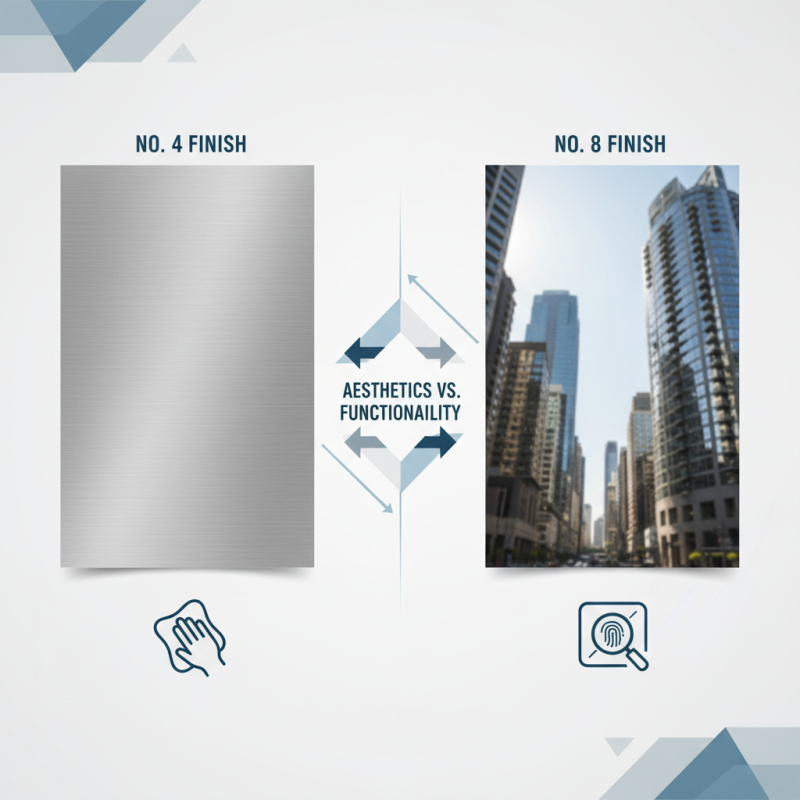
When it comes to choosing between No 4 and No 8 finishes, understanding their characteristics is crucial. No 4 finish is commonly known for its brushed appearance. This finish has a consistent texture and a subtle sheen. It is often favored for its ability to hide fingerprints and minor blemishes. The soft, non-reflective surface contributes to a warm and inviting aesthetic.
On the other hand, No 8 finish is highly polished and mirror-like. This shiny surface can be striking but also shows fingerprints and scratches more readily. It’s ideal for applications where a luxurious, sophisticated look is desired. However, the maintenance required for a mirror finish can be a drawback for some users.
Evaluating the practical applications of each finish is essential. For instance, No 4 may be advantageous in kitchen environments, where cleanliness is key, while No 8 could elevate the design in public spaces or high-end residential settings. Reflecting on your specific needs and preferences can help guide this decision. Sometimes, the ideal choice may not be immediately clear.
| Finish Type | Texture | Typical Use Cases | Durability | Cost |
|---|---|---|---|---|
| No 4 Finish | Satin-like, Medium Gloss | Appliances, Kitchen Fixtures | Good | Moderate |
| No 8 Finish | Highly Polished, Reflective | Decorative Items, High-End Fixtures | Excellent | Higher |
When selecting between No 4 and No 8 finishes, understanding the unique characteristics of each is crucial. The No 4 finish is a common choice in the industry, known for its brushed appearance. This finish typically involves a series of grinding operations, resulting in a uniform, matte texture. According to the American Stainless Steel Institute, around 30% of stainless steel applications utilize this finish, especially in industries like food processing and pharmaceuticals.
This finishing method helps conceal fingerprints and minor imperfections, making it ideal for surfaces that require frequent cleaning. Its non-reflective nature provides practical benefits in environments where glare is a concern. Research shows that equipment finished this way remains visually appealing over time, adding to its reliability in high-traffic areas.
However, No 4 does come with drawbacks. It may not possess the same aesthetic allure as No 8 finishes, which offer a reflective, mirror-like quality. The choice between these finishes depends largely on the application and environment. While No 4 excels in functionality, it may leave some users desiring the elegance of a polished surface. Balancing performance with aesthetic preferences becomes a thoughtful consideration during the decision-making process.
No 8 finish is known for its distinct characteristics and versatile applications. This finish is typically created through electrolytic polishing, resulting in a smooth, reflective surface. The low roughness average (Ra) of around 0.5 microinches or less sets No 8 apart in industries where hygiene and aesthetics matter, such as food processing and pharmaceuticals. According to recent industry reports, products made with No 8 finish are often preferred for high-end applications due to their corrosion resistance.
Applications for No 8 finish extend beyond appearance. In architectural designs, stainless steel with this finish is commonly used in elevators and railings. These items not only enhance visual appeal but also require minimal maintenance. However, it is essential to note that while this finish is aesthetically pleasing, it can show fingerprints and smudges more readily than other finishes. Careful consideration of these aspects is crucial when deciding on materials for a project.
The versatility of No 8 finish also invites scrutiny. Though it serves well in many settings, it may not be suitable for environments with abrasive conditions. Alternatives like No 4 finish might perform better in such contexts, offering a balance between durability and visual appeal. Understanding the specific requirements of each application helps in making informed choices about finishes.
When deciding between No 4 and No 8 finishes, it's crucial to analyze their practical applications. No 4 finish, known for its brushed appearance, offers a subtle texture. It’s often chosen for interior surfaces, providing a soft shine that reduces the visibility of fingerprints and scratches. This makes it suitable for kitchen appliances and architectural features. However, while it looks pleasing, it may require regular maintenance to preserve its aesthetic.
On the other hand, No 8 finish presents a reflective, mirror-like surface. This enhances visual appeal and brings elegance to any setting. Commonly used in high-end projects, No 8 can accentuate lighting and space. Yet, its shiny nature can highlight smudges and dust, calling for frequent cleaning. For users prioritizing a polished look over ease of maintenance, No 8 is ideal.
When choosing between them, consider the environment and usage. If you prefer less upkeep, No 4 might suit you better. But if you aim for a luxurious finish, No 8 could be worthwhile. Ultimately, your choice depends on balancing aesthetics with practicality. Reflect on your needs before making a decision.
Choosing between No 4 and No 8 finishes can be tricky. Both options have unique qualities.
No 4
is often preferred for its uniform appearance and ease of maintenance. It has a brushed texture that hides fingerprints and scratches well. This finish is great for items in high-traffic areas.
On the other hand, No 8
has a polished look. It provides a shiny, reflective surface. This finish can elevate the aesthetics of your space. However, it may show smudges more easily and requires regular cleaning.
If you desire a sleek appearance, No 8 is appealing, but be prepared for the upkeep.
Consider your environment and the item's purpose. Will it endure heavy use? If yes, No 4 might be your better choice.
If you're focused on appearance, No 8 could be worth the extra care. Reflect on these factors as you make your decision. Your choice should match your lifestyle and aesthetic goals.
: No 4 finish has a brushed appearance with a consistent texture and subtle sheen.
It's often used in kitchen environments and industries like food processing and pharmaceuticals.
It hides fingerprints and minor blemishes, making cleaning easier and more effective.
No 8 finish is highly polished, offering a mirror-like surface that is visually striking.
It's used in architectural designs, elevators, and railings, adding aesthetic appeal with minimal maintenance.
It shows fingerprints and smudges more readily, requiring more upkeep than other finishes.
While functional, it may lack the elegant appeal that No 8 finish provides.
No, it may not withstand abrasive environments as effectively as No 4 finish does.
The specific needs, preferences, and environmental conditions should be carefully considered.
Sometimes, the best option isn't clear and requires thoughtful reflection on various aspects.
When deciding between No. 4 and No. 8 finishes, it's important to understand their key characteristics and applications. No. 4 finish, often known for its brushed surface, is commonly used in kitchen equipment and appliances due to its balance of aesthetics and resistance to fingerprints and corrosion. In contrast, the highly polished No. 8 finish, often referred to as mirror finish, offers a reflective surface that is used in decorative applications and high-end environments where visual appeal is paramount.
To determine what is the difference between No. 4 and No. 8 finishes, one should consider factors such as desired aesthetic, functionality, and maintenance requirements. While No. 4 provides durability and ease of cleaning, No. 8 excels in visual impact. Ultimately, the choice will depend on the specific needs of the project and the environment where the finish will be applied.

Sandstorm Steel