Steel forms the skeleton of many modern buildings, from high-rise columns to reinforced concrete foundations. Yet steel is not one uniform material. Each type responds differently to loads, weather, fire exposure, fabrication, and maintenance demands. Understanding how steel improves building strength and safety helps designers make better decisions before construction begins.
This guide examines ten important steel types used in Chinese and international building projects. It considers carbon steel, high-strength low-alloy steel, stainless steel, weathering steel, reinforcing steel, and other practical choices. Engineers evaluate yield strength, ductility, weldability, corrosion resistance, and connection performance. These details matter. A beam may carry heavy floors, while a thin reinforcing bar controls cracking inside concrete. On a coastal site, salt and moisture can quietly weaken poorly protected surfaces. Proper coating, drainage, inspection, and installation remain essential. Strong steel alone cannot guarantee a safe building.
Site conditions change everything. A material that performs well in a dry warehouse may struggle near the sea. Building codes, tested specifications, and qualified engineers should guide final selection. Manufacturers must provide traceable grades and reliable test data. Inspectors should check dimensions, welds, bolts, and visible corrosion during construction. Small mistakes can become expensive later. This overview is useful, but it is not a substitute for project-specific engineering. A ranking can oversimplify real choices. The safest result comes from matching each steel type to actual loads, exposure, fire strategy, and construction quality.
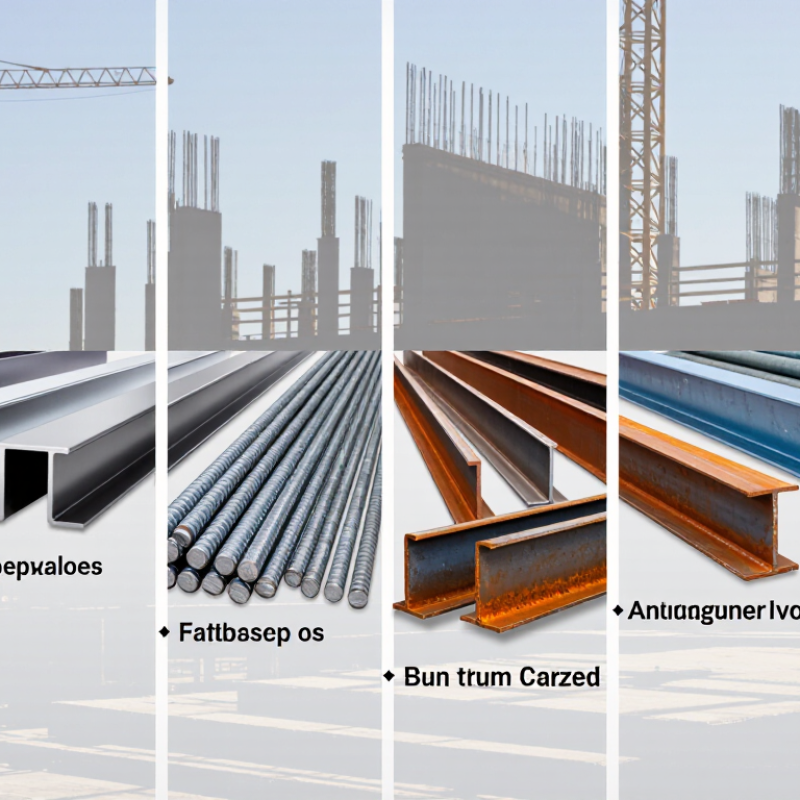
China Top 10 Steel Types for Building Strength and Safety
Building steel is best compared through grade systems, not product names. ASTM, EN, and GB/T often describe similar performance, but their requirements are not identical. Engineers should verify yield strength, tensile strength, thickness range, impact toughness, and welding rules before selecting an equivalent.
Common structural carbon steels include ASTM A36, EN S235JR, and GB/T Q235B. Higher-strength options include ASTM A572 Grade 50, EN S355JR, and GB/T Q355B. Heavy columns may use ASTM A992, EN S355, or Q355B, depending on design calculations. Weathering plate can be reviewed through ASTM A588, EN S355J0WP, and related atmospheric-resistant GB/T grades.
For reinforcement, ASTM A615 Grade 60, EN B500B, and GB/T HRB400 are widely referenced, although their ductility and testing conditions still need checking. Hollow sections may use ASTM A500 Grade C, EN S355J2H, or GB/T Q355D. High-strength plate, such as ASTM A514, EN S460, and GB/T Q460C, can reduce member weight but demands careful welding control.
Not a perfect match.
Other useful categories include galvanized sheet under ASTM A653, EN DX51D, and GB/T DX51D, plus quenched-and-tempered structural grades such as ASTM A709, EN S690, and GB/T Q690. These comparisons are practical starting points, not automatic substitutions. Site temperature, bolt compatibility, coating thickness, and mill certificates can change the decision. A neat table may hide important differences.
A practical comparison of commonly specified structural, hollow-section, weathering, reinforcing, and high-strength steels.
| No. | Steel type and typical form | ASTM / AASHTO reference | EN reference | GB/T reference | Typical minimum yield strength | Common building uses | Key safety or selection note |
|---|---|---|---|---|---|---|---|
| 1 | General structural carbon steel Plates, bars, and rolled sections |
ASTM A36 / A36M | EN 10025-2: S275JR | GB/T 700: Q235B | Approximately 235–250 MPa, depending on standard and product thickness | General frames, brackets, base plates, platforms, and secondary steelwork | Economical and weldable; verify impact requirements and thickness-specific properties before substitution. |
| 2 | High-strength low-alloy structural steel Plates and rolled sections |
ASTM A572 / A572M Grade 50 | EN 10025-2: S355JR / S355J2 | GB/T 1591: Q355B / Q355D | Approximately 345–355 MPa | Primary beams, columns, trusses, bridges, and heavy structural frames | Higher strength can reduce member weight; check buckling, connection design, and welding procedures. |
| 3 | Wide-flange structural steel Hot-rolled I-sections and W-shapes |
ASTM A992 / A992M | EN 10025-2: S355J2; section availability varies | GB/T 1591: Q355D; section availability varies | 345 MPa minimum for typical W-shape specifications | High-rise columns, floor beams, transfer structures, and long-span framing | Designed specifically for structural shapes; confirm flange, web, toughness, and chemical limits. |
| 4 | Weathering structural steel Atmospheric-corrosion-resistant plate and sections |
ASTM A588 / A588M Grade 50 | EN 10025-5: S355J2W | GB/T 4171: Q355NH | Approximately 345–355 MPa | Exposed bridges, façades, canopies, outdoor stairs, and architectural structures | Requires suitable wet-dry exposure; avoid sheltered crevices, marine splash zones, and constantly damp conditions. |
| 5 | Structural hollow-section steel Square, rectangular, and circular HSS |
ASTM A500 / A500M Grade C | EN 10219-1: S355J2H | GB/T 6725: Q355B; product standard must be confirmed | Approximately 345–355 MPa | Tube columns, space frames, trusses, handrails, and architectural supports | Closed sections offer efficient compression and torsional performance; account for local wall slenderness. |
| 6 | Carbon steel pipe for structural and utility service Seamless or welded pipe |
ASTM A53 / A53M Grade B | EN 10217-1: P235TR1; application dependent | GB/T 8162: 20 steel; product standard dependent | Approximately 235 MPa for ASTM A53 Grade B | Pipe columns, bracing, low-pressure services, temporary works, and support frames | Do not use a pipe grade for pressure service or seismic applications without confirming the governing code. |
| 7 | High-strength quenched-and-tempered steel Structural plate |
ASTM A514 / A514M Grade B | EN 10025-6: S690QL | GB/T 16270: Q690D | Approximately 690 MPa for common thickness ranges | Heavy lifting structures, cranes, long-span members, mobile equipment, and high-load frames | Requires controlled welding, heat input, preheating, and toughness verification. |
| 8 | Structural reinforcing bar Hot-rolled deformed rebar |
ASTM A615 / A615M Grade 60 | EN 10080: B500B | GB/T 1499.2: HRB400 | Approximately 400–500 MPa, depending on grade system | Reinforced-concrete slabs, beams, columns, foundations, and retaining walls | Strength, ductility, rib geometry, lap length, and anchorage must follow the concrete design code. |
| 9 | Weldable seismic reinforcing bar Controlled-chemistry deformed rebar |
ASTM A706 / A706M Grade 60 | EN 10080: B500C | GB/T 1499.2: HRB400E | Approximately 400–500 MPa, with enhanced ductility requirements | Seismic frames, ductile reinforced-concrete walls, columns, and critical structural zones | Lower carbon-equivalent limits and controlled tensile-to-yield ratios improve weldability and ductile behavior. |
| 10 | Structural galvanized sheet steel Continuous hot-dip zinc-coated sheet |
ASTM A653 / A653M SS Grade 50 | EN 10346: S350GD | GB/T 2518: S350GD | Approximately 350 MPa for common structural sheet grades | Cold-formed purlins, roof decks, wall panels, framing members, and façade support systems | Specify coating mass, forming direction, corrosion exposure, and connection details together with the steel grade. |
Carbon and structural steels often form the practical core of safe building design. ASTM A36 provides a minimum yield strength of about 250 MPa, making it suitable for plates, angles, frames, and general supports. S275 reaches approximately 275 MPa, while S355 reaches about 355 MPa. These grades can carry higher design stresses, but strength alone does not guarantee safety.
On active construction sites, engineers check thickness, welding details, connection design, and mill certificates. Thicker sections may show reduced yield values, depending on the applicable standard. S355 can reduce member size, yet it may demand tighter fabrication control. A36 is familiar and workable, but its lower strength can increase weight. This trade-off is easy to overlook. Corrosion protection also matters, especially around exposed edges, bolt holes, and drainage points. Poor detailing can defeat a strong steel grade.
Tips: Match the grade to the load, span, environment, and fabrication method. Confirm yield strength by thickness, not by grade name alone. Review certificates and weld procedures before installation. Measure actual members on site when possible. Design assumptions are sometimes wrong.
Representative minimum yield strength values for commonly used carbon and structural steels. Actual requirements may vary by product thickness and applicable standard.
Yield strength is the stress at which steel begins to deform plastically. Higher values can support greater structural loads, but design safety also depends on thickness, weldability, buckling resistance, connection details, corrosion protection, and the governing construction code. Values shown are representative minimum nominal values in MPa based on commonly referenced ASTM and EN material grades.
China Top 10 Steel Types for Building Strength and Safety
Rebar and HSLA Steel: ASTM A615 Grade 60 and S460–S690 Strength Classes
Steel selection begins with the load path, not a catalogue ranking. ASTM A615 Grade 60 rebar provides a nominal yield strength of 60 ksi, or about 420 MPa. It supports slabs, beams, columns, and foundations when engineers specify correct spacing, anchorage, and concrete cover. On site, bar marks and heat numbers should match mill certificates and delivery records. Small errors can become expensive.
HSLA structural steels use higher strength with controlled alloying and processing. S460 generally indicates a minimum yield strength near 460 MPa, while S690 reaches about 690 MPa. Actual values depend on thickness, product form, temperature, and the governing standard. S690 can reduce plate thickness and dead load, but welding procedures need tighter control. Hydrogen management, preheating, and inspection matter.
Strength alone is not safety.
Designers should check ductility, buckling, fatigue, fire exposure, and connection behavior. A stronger grade may complicate fabrication or create mismatched weld details. I have seen specifications focus heavily on yield strength while overlooking bend tests and site handling. That approach deserves criticism. Reliable procurement includes traceable certificates, independent testing, dimensional checks, and clear acceptance criteria. Engineers should also confirm that every grade fits local building codes and the project’s actual service conditions.
For building strength and safety, steel selection begins with exposure, not appearance. Stainless 304 suits many indoor and mildly outdoor structures, while 316 offers stronger resistance to chlorides near seawater, deicing salts, and coastal spray. The International Stainless Steel Forum reported global stainless crude-steel production of about 58.4 million tonnes in 2023, showing its broad industrial use. Still, stainless steel is not maintenance-free. Trapped water can stain surfaces, and poor welding practice may reduce corrosion resistance.
Galvanized steel marked Z275 carries a minimum coating mass of 275 g/m² across both surfaces under EN 10346. That equals roughly 19 micrometres of zinc per side, although actual protection depends on cutting, forming, drainage, and local exposure. A clear roof edge matters. A hidden crevice does too. Zinc sacrifices itself before the underlying steel, but salty environments can consume that protection faster than many design tables suggest. Field inspections should check exposed edges, fasteners, and damaged coating zones.
Weathering steel A588 develops a protective oxide layer when wetting and drying cycles remain suitable. ASTM requirements commonly specify a minimum yield strength of 50 ksi for relevant plate thicknesses. The material can reduce painting needs, but it needs correct detailing. Continuous dampness prevents stable patina formation. Runoff may stain concrete, stone, and façades. World Steel Association data recorded about 1.89 billion tonnes of crude steel production in 2023, yet volume does not guarantee safe design. My own judgment would still question any material schedule that ignores drainage, weld zones, inspection access, and chloride exposure. Small omissions become expensive failures.
China’s building sector uses several steel types to balance strength, durability, and safety. Among them, alloy steel, tool steel, and high-carbon steel require careful selection. Their performance depends on chemistry, heat treatment, section size, and fabrication quality.
4140
4140 is a chromium-molybdenum alloy steel with useful strength and toughness. It suits heavily loaded shafts, connection components, and machinery supporting construction work. Proper quenching and tempering can improve fatigue resistance. However, poor welding control may create hard zones and hidden cracking. Preheating and qualified procedures matter.
D2
D2 is a high-carbon, high-chromium tool steel designed mainly for wear resistance. It performs well in dies, cutting tools, and forming equipment used around building production. It is hard, but not the best choice for impact-loaded structural members. Brittle failure remains possible.
High-carbon steels containing roughly 0.60–1.00% carbon can achieve excellent hardness and spring strength. They may suit wear plates, rails, or specialized components, but their weldability decreases as carbon rises. Very hard is not always safer.
In practical inspections, I would check mill certificates, hardness results, heat-treatment records, and non-destructive testing reports. Surface quality alone proves little. Temperature, loading direction, and corrosion exposure can change performance significantly. A small design shortcut can become a serious weakness. Engineers should verify applicable construction standards before approving any grade.
Stainless steel 304 suits indoor structures and mildly outdoor environments. It works well where chloride exposure remains limited. However, it is not maintenance-free. Trapped water can stain surfaces. Poor welding may reduce corrosion resistance.
Stainless steel 316 provides stronger resistance to chlorides. This includes seawater, coastal spray, and deicing salts. It may perform better beside roads or marine structures. Still, detailing and inspection remain necessary. More resistance does not mean zero corrosion.
Check exposed edges, fasteners, cut areas, and damaged coating zones. A galvanized coating marked Z275 contains at least 275 grams per square metre. That usually equals about 19 micrometres per side. Protection depends on forming, drainage, and local exposure. Salty air can consume zinc faster.
Clear roof edges help water escape. Hidden crevices can trap moisture and accelerate damage. Zinc protects steel sacrificially. Continuous dampness still creates problems. Drainage matters more than appearance.
It needs repeated wetting and drying cycles. The surface forms a stable oxide layer under suitable exposure. Continuous dampness can prevent proper patina development. Runoff may stain concrete, stone, or façades. A dry detail is essential.
No material should be treated as maintenance-free. Weathering steel may reduce painting needs. It still requires correct drainage, inspection access, and runoff control. I would question any design ignoring weld zones. Small omissions become expensive failures.
4140 suits heavily loaded shafts, connection parts, and machine components. Quenching and tempering can improve strength and fatigue resistance. Poor welding may create hard zones or hidden cracks. Preheating and qualified procedures are important. Small cracks matter.
D2 offers high hardness and strong wear resistance. It suits dies, cutting tools, and forming equipment. Its toughness may be insufficient for repeated impact. Brittle failure remains possible. Very hard is not always safer.
Carbon contents around 0.60–1.00% can provide hardness and spring strength. These steels may suit wear plates, rails, or specialized components. Weldability generally decreases as carbon content rises. Review certificates, hardness results, and heat-treatment records. Non-destructive testing can reveal hidden weaknesses. I would not rely on surface appearance alone.
This guide explains ten major steel types used to improve structural performance, durability, and construction safety. It compares ASTM, EN, and GB/T grade systems, highlighting carbon and structural steels such as A36 and S275–S355, which typically provide yield strengths from about 250 to 355 MPa. It also covers reinforcing and high-strength low-alloy steels, including Grade 60 rebar and S460–S690 strength classes, for demanding load-bearing applications. Together, these materials show how steel improves building strength and safety through reliable load capacity, controlled deformation, and consistent engineering performance.
The article further examines stainless steels such as 304 and 316, galvanized coatings such as Z275, and weathering steel such as A588 for corrosion resistance and longer service life. Alloy, tool, and high-carbon steels—including 4140, D2, and steels containing approximately 0.60–1.00% carbon—are discussed for specialized components requiring hardness, wear resistance, or toughness. Selecting the appropriate grade, coating, and fabrication method helps engineers balance strength, durability, maintenance needs, and overall structural safety.
Sandstorm Steel