Surface roughness is a critical parameter in various manufacturing processes. Understanding how to measure surface roughness after machine polishing is essential for ensuring product quality. Polished surfaces are often required for aesthetic and functional reasons. However, achieving the desired smoothness can be challenging.
Measuring surface roughness involves several techniques, each with distinct advantages and limitations. These methods can help verify if the polishing process has achieved the required specifications. Some tools provide precise readings, while others may be more practical in certain conditions. It is important to choose the right method based on the specific needs of the project.
When exploring how to measure surface roughness after machine polishing, one might face challenges. Not all methods are equally effective for every material or surface condition. It’s crucial to understand the context and select an appropriate measurement technique. In this article, we will delve into the best five methods to assess surface roughness, providing insights for optimal results.
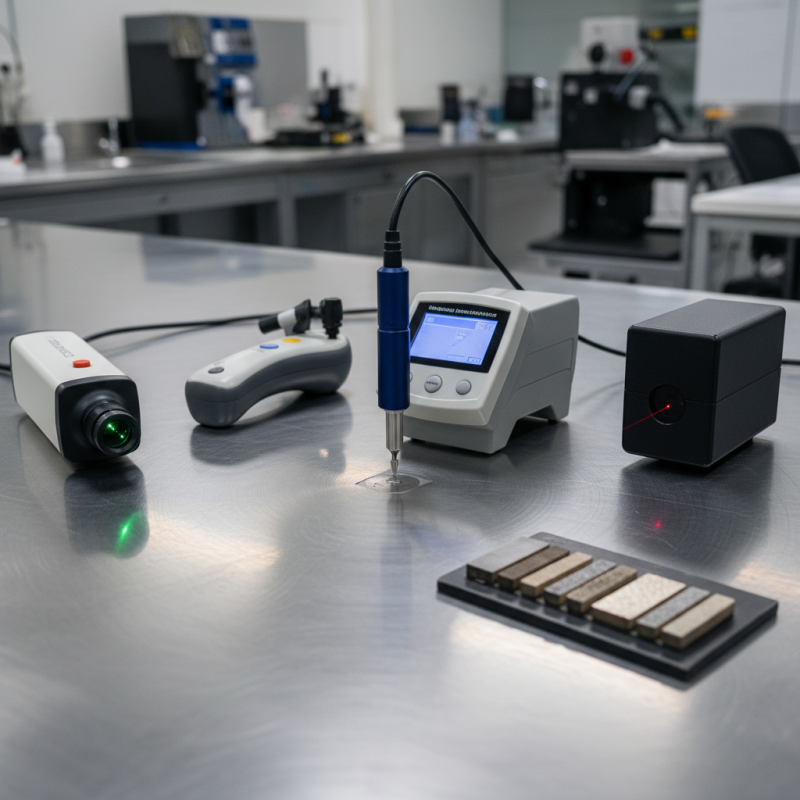
Surface roughness is a critical factor in the polishing process. It directly influences how light interacts with a surface and the overall aesthetics of the finished product. When surfaces are polished, the goal is typically to achieve a smooth finish. However, imperfections can still remain. These might include tiny scratches or uneven patches that are not readily visible but affect performance.
Understanding surface roughness requires measuring it accurately. Various methods exist, each with its own advantages and limitations. For instance, tactile methods may not capture all microscopic details. Optical methods, while precise, may struggle with reflective surfaces. Each approach has its own context of use, leading to questions about reliability and reproducibility.
In practical terms, maintaining a smooth surface is challenging. Even after extensive polishing, unexpected results can emerge. It’s essential to evaluate the surface regularly throughout the process. Regular checks can reveal issues that need addressing, ensuring the final product meets both visual and functional standards.
Manufacturers should reflect on their techniques and continuously seek improvements in measurement methods for better accuracy.
Measuring surface roughness after polishing is critical in many industries. Accurate assessments ensure quality and performance. Common techniques include contact and non-contact methods, each with unique advantages.
Contact methods, like stylus profilometry, use a fine tip to trace the surface. This technique provides detailed measurements of roughness, often expressed as Ra (average roughness). A recent industry report highlighted that 70% of manufacturers prefer this method for its accuracy. However, surface damage can occur, making it essential to take care during the process.
Non-contact methods, such as optical interferometry, use light to assess surface features. This technique is less invasive and ideal for delicate surfaces. Reports indicate that it can achieve resolutions up to 10 nanometers. While highly effective, it can be influenced by surface reflectivity.
Tips: Always check calibration before measurement. Regular maintenance of equipment is crucial for accurate results. Consider using multiple methods for comprehensive assessments. This approach helps mitigate the limitations of individual techniques.
The contact profilometry method is a widely used technique for measuring surface roughness after polishing. This method involves dragging a stylus across the surface. As the stylus moves, it records the surface profile, providing precise measurements of roughness features. Recent studies indicate that contact profilometry can achieve a vertical resolution of up to 1 nanometer, making it highly effective for polished surfaces.
However, contact profilometry does have some limitations. The method is sensitive to the tip radius of the stylus used, which can affect the accuracy of measurements. For example, a larger tip radius might overlook small surface irregularities. Additionally, surfaces that are extremely soft or delicate may result in tip wear or damage, leading to unreliable data.
Despite these challenges, contact profilometry remains a valuable tool in materials science and engineering. Numerous industry standards emphasize the importance of accurate surface roughness measurements. Reports show that up to 30% of failures in materials can be traced back to inadequate surface finishes. Thus, understanding and utilizing contact profilometry can enhance product reliability and performance in critical applications.
In modern manufacturing, evaluating surface roughness post-polishing is critical. Non-contact optical methods offer a unique advantage. They provide valuable measurements without physically touching the surface, which might alter its characteristics. Optical methods use light reflection to measure surface variations, proving effective for delicate materials.
Recent studies indicate that optical methods can achieve resolution levels of up to 0.1 micrometers. This precision is crucial for industries where surface quality impacts performance, like aerospace and medical devices. However, not all optical techniques are perfect. Factors like surface contamination or environmental conditions can lead to measurement errors. Knowing these limitations is vital for accurate assessments.
Some optical tools require precise calibrations and training to ensure valid results. While they are generally fast and efficient, results can be inconsistent if operators lack experience. A deep understanding of the specific application is necessary. In some cases, combining optical methods with traditional contact techniques can enhance reliability. Each approach has its own strengths and weaknesses, and careful evaluation is needed to determine the best method for each scenario.
Surface roughness plays a crucial role in various industries, affecting product performance and aesthetic appeal. Accurate measurement of surface roughness after polishing is essential for quality control. Several techniques are available, each with its pros and cons.
One widely used method is the contact profilometer. It employs a stylus to trace the surface, providing precise measurements of roughness parameters. However, this technique can sometimes damage the surface and may not be suitable for very soft materials. In contrast, optical methods, like white light interferometry, allow for non-contact measurements. They can capture complex surface features but may struggle with transparency or shiny surfaces.
Another option is atomic force microscopy (AFM), offering high-resolution results. Reports indicate that AFM can measure features as small as a few nanometers. However, the cost and time involved in AFM may limit its practicality. Laser scanning techniques provide a quick alternative but might overlook fine details. Ultimately, the choice of method depends on the application and the level of precision required, highlighting the need for thoughtful evaluation of each technique.
: It measures surface roughness after polishing by dragging a stylus across a surface.
It can achieve a vertical resolution of up to 1 nanometer, ideal for polished surfaces.
The method's accuracy depends on the tip radius of the stylus used.
They may overlook small surface irregularities, leading to inaccurate measurements.
No, extremely soft or delicate surfaces may cause tip wear and unreliable data.
They measure surface roughness without touching, preventing alteration of surface characteristics.
They can achieve resolution levels of up to 0.1 micrometers.
Surface contamination or adverse environmental conditions are common issues.
Inconsistent results can arise from lack of training in precise calibration and measurement.
Yes, combining optical methods with contact techniques can enhance reliability and accuracy.
The article "Best 5 Methods to Measure Surface Roughness After Polishing" provides a comprehensive overview of surface roughness and its significance in the polishing process. Understanding how to measure surface roughness after machine polishing is crucial for ensuring the quality and performance of finished products. The article discusses various common techniques for measuring surface roughness, including both traditional contact profilometry methods and advanced non-contact optical methods.
A detailed explanation of contact profilometry is provided, showcasing its effectiveness and limitations. Furthermore, the article introduces non-contact optical methods, which offer innovative ways to achieve precise measurements without physical contact with the surface. Finally, a comparative analysis of these measurement techniques highlights their respective advantages and situations in which each method can be best utilized, equipping readers with the knowledge they need to select the appropriate technique for their specific applications.

Sandstorm Steel